
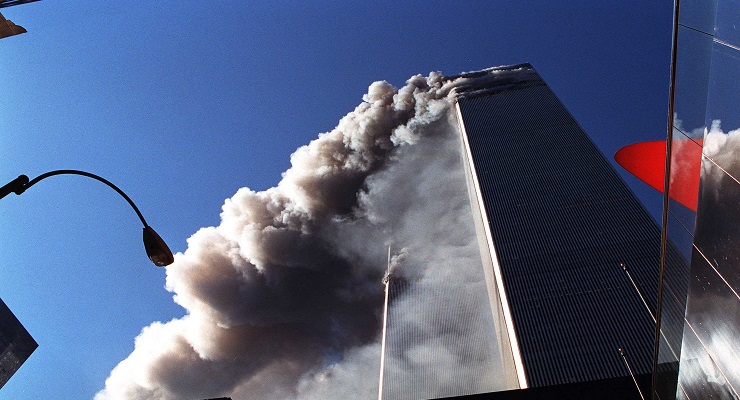
The federal government continues to add to its anti-terrorism powers two decades since 9/11 and shows no signs of slowing down despite concerns that Australian’s freedoms are being eroded, according to one of Australia’s leading constitutional experts.
This comes as a new report commissioned by GetUp! found that Australia has introduced 92 new anti-terrorism laws in the past 20 years, with only one law repealed since.
Professor George Williams is a professor of law at the University of New South Wales who dissected Australia’s legislative response to the September 11 attacks and subsequent terror threats in the 2011 paper A Decade of Australian Anti-Terror Laws. Williams argued at the time that a suite of new laws hastily passed in response eroded basic freedoms, had major issues, and exposed structural problems of how legislation was created by Australia’s political class.
Reflecting on the decade since, Williams says the same trends have continued into the second decade since 9/11.
“We’ve continued on a similar path, making too many of the same mistakes,” he said.
Williams draws a distinction between the anti-terror laws passed in the 10 years since he wrote about it. In the decade after 9/11, many anti-terror laws concerned coercive powers of law enforcement and dealing with topics like foreign fighters. This last decade, Williams told Crikey, has seen the expansion of surveillance and intelligence powers.
He points to the mandatory retention of metadata as an example of how these powers, proposed to combat the spectre of terrorism and other serious crimes, can be misused. “Agencies ended up using [metadata] for a whole lot of other things,” said Williams. “That’s partly a drafting problem from when you rush these things through.”
The Democracy Dossier: Secrecy and Power in Australia’s National Security State report prepared by a group of three senior criminal and law lecturers from Australian universities for GetUp! argues the “vast, complex laws” that establish new counter-terrorism powers are undermining Australia’s democracy.
“A secretive culture which resists transparency and accountability has become the hallmark of the current Coalition government, making it difficult for journalists to access information about what government departments are doing, and what they are doing wrong,” they write.
The report looks at 92 anti-terror laws passed by the federal Parliament since September 11, comprising more than 5000 pages of legislation. Of those, just one law has been rolled back — ASIO’s power to covertly detain people for up to seven days was repealed last year — but even aspects of that law were introduced into successive anti-terrorism legislation. The frequency of the passage of anti-terror laws spiked in 2002, but began peaking again in 2018.
Williams acknowledges that sunsetting anti-terror laws hasn’t worked as intended. Many of these laws are just reinstated without much consideration. Part of the problem, Williams argues, is that there’s very little political will to push back against such measures.
“You have to recognise there has been very little political resistance to these laws,” he said. “I can’t think of an example when the opposition has opposed any of them.”
He argues that it’s difficult for the public to evaluate how anti-terrorism legislation is working and whether it’s worth the trade-off of lost freedoms: “It’s very difficult because how do we determine what is successful when success is when [a terrorist attack] doesn’t happen?”
Still, Williams has hope that the march of new, intrusive laws may slow. He points to the pandemic and the current fixation on foreign interference as factors that may lead to fewer new domestic anti-terror laws.
“I think there is a need for strong laws,” he said. “But the question is, do you need the overreach? Did you need laws this coercive and extensive? Probably not.”



Crikey is committed to hosting lively discussions. Help us keep the conversation useful, interesting and welcoming. We aim to publish comments quickly in the interest of promoting robust conversation, but we’re a small team and we deploy filters to protect against legal risk. Occasionally your comment may be held up while we review, but we’re working as fast as we can to keep the conversation rolling.
The Crikey comment section is members-only content. Please subscribe to leave a comment.
The Crikey comment section is members-only content. Please login to leave a comment.