

Relief for financial markets can come in surprising forms, and overnight saw one of the more surprising: inflation running at a near 40-year high of 7.7% led to a big surge on Wall Street.
The Dow rose 1200 points (or 3.7%), the S&P 500 jumped 5.5% and the Nasdaq enjoyed its best day on record with a 760-point (7.35%) jump.
Markets have been searching for a reason to rally and they got two: the perceived failure of MAGA Republicans and a status quo outcome in the midterms, and the October US consumer price inflation report. That showed a fall in annual CPI to 7.7% in October, the lowest since the start of the year and down from 8.2% in September.
The fall in headline cost pressures and easing in core inflation to an annual 6.3% don’t mean inflation has been vanquished in the US, but investors desperate to change the narrative to a more bullish one.
The more positive outlook will be tested by the next Fed meeting in mid-December, which will give investors a sense of how Federal Reserve members see interest rates moving after the lower inflation number. But the CPI outcome was enough for markets which have been looking for any excuse to rally. A week ago there was a silly fiction that China was about to reopen, based on a single screenshot of an unconfirmed document. That saw Asian and commodity markets lift, until the penny — or several billion dollars — dropped that President Xi Jinping remains committed to lockdowns.
Lower inflation, however, doesn’t mean a lower fall in real wages: October data showed average hourly wages in the US slowed an annual 4.7% — the lowest rate of growth for more than a year and well under the peak 5.6% rate seen in March. That means US real wages were 3% under the American inflation inflation rate in October — a situation analogous to that here in Australia.
Just like here, warnings of a wage-price spiral look more like hysteria and anti-worker propaganda than a realistic scenario.
Australian inflation is still rising because of high energy costs and the surge in housing costs (which means the real inflation rate is considerably overstated because only a few thousand people are impacted each month by higher new home costs), so our CPI has yet to peak. The forecast is about 8% in coming months — but that’s less than the US peak of 9.1% and the European and UK peaks above 10%.
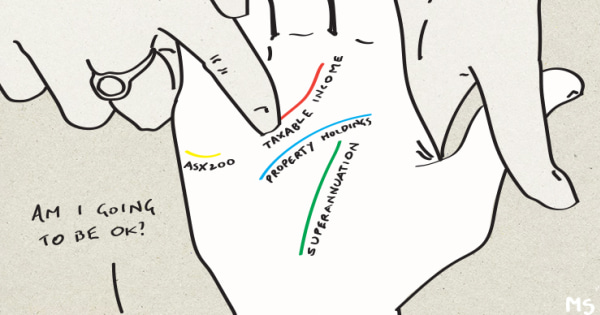
At least workers can take comfort in their superannuation resuming growth if the sharemarket rally holds. But confidence is a precarious thing these days.





Interesting, offshore analysis has shown some decline in global demand coming and e.g. highlighting Russia’s dependence upon fossil fuel exports and impacting budget revenues, one example suggesting less inflationary pressure?
However, in the background there are subtle dynamics which impact both demand and inflation e.g. trying to explain Australia and the developed world’s low growth rates?
This is population ageing when working age cohorts, peak personal investment and spending, have passed ‘demographic sweet spot’ impacting the overall economy as numbers of retirees increase relative to working age, but have no need to spend or invest significant amounts?
In Australia we focus so much on short term ‘temporary churn over’ via the annual ABS UNPD derived NOM net overseas migration snapshots, but ignore the long term historical and future trends for cohorts via the OECD; the latter ‘paints a picture’ versus shouting at the former as ‘immigrants’ for ’emotional & torrid debates’.
Interesting, offshore analysis has shown some decline in global demand coming and e.g. highlighting Russia’s dependence upon fossil fuel exports and impacting budget revenues, one example suggesting less inflationary pressure?
However, in the background there are subtle dynamics which impact both demand and inflation e.g. trying to explain Australia and the developed world’s low growth rates?
This is population ageing when working age cohorts, peak personal investment and spending, have passed ‘demographic sweet spot’ impacting the overall economy as numbers of retirees increase relative to working age, but have no need to spend or invest significant amounts?