

On a recent spring morning on the front lines of eastern Ukraine, a Melbourne man in his early 30s went through his usual routine of making himself a cup of filter coffee.
“A lot of the guys just drink Nescafe, but being from Melbourne and everything, I want the good shit,” the volunteer soldier Robert — a pseudonym — tells Crikey. “I get the coffee mailed from Kyiv. It’s a good morale thing, to have little touches like that.
“Some of the guys say ‘You’re a bit soft,’ but you know what — if this is what makes it tolerable being out here, I’m going to do it.”
Crikey spoke to young men who belong to a small group of Australians who have given up the comfort and peace of life back home to take up arms and defend Ukraine against Russia’s invading forces. Over there, it’s a life of trenches and mud, of bullets, shells and drones.
“It’s a pretty shit experience when you’re at the zero line — you can’t really go outside and there’s a risk of being killed, constantly,” Robert says. “Drones are flying everywhere — it’s a fucking nightmare at times.”
‘This was my time to step up’
Robert has been in Ukraine long enough to know what life was like before Russia’s February 2022 invasion — which escalated a conflict that had been raging since 2014 in Ukraine’s south and east into a full-scale war across the entire country.
“I really love Ukraine as a country — many of the cities are amazing,” Robert says. “I’m kind of privileged to be able to say this, but in some aspects I found I had a better quality of life here than I do in Melbourne.”
That love for Ukraine and a feeling he owed a debt to its people informed the decision to join the country’s defence forces: “For me it was like, I want to know I’ve done everything possible to help out. I want to know in my heart, mind and soul. I don’t want to have the regret — that this was my time to step up, and I didn’t do it. I would have lived with that burden forever.
“I genuinely believe that what’s happening here is the equivalent in terms of evil as the second world war — there is genocide being perpetrated in Ukraine. I’ve seen cities and towns destroyed, civilians killed, and the Ukrainian national identity being destroyed.”
Brushes with death
Joe — a pseudonym — says he decided to join the military after initially arriving in the country as a humanitarian volunteer.
“When the full-scale invasion happened last year, I started seeing the images and the videos coming out about what the Russians were doing to the civilians and to the cities,” the Brisbane man, also in his 30s, tells Crikey.
“It just really kind of stuck with me. And when President [Volodymyr] Zelenskyy said they needed foreign volunteers to come and help, I said: I’m physically fit. I’ve got two hands, two legs, I’ve got a brain, surely there is something I can do.
“It took me a couple of months to actually make the decision. But when I arrived in Poland, and saw the Ukranian refugees protesting in the middle of Krakow square, it hit me — 100%, this is something that’s the right thing to do.”
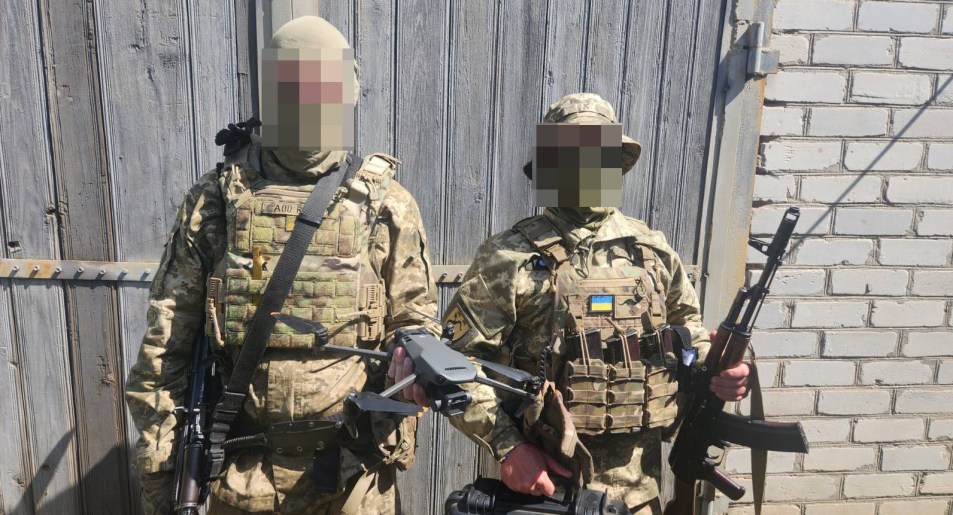
Neither man has any family connections to Ukraine, nor prior military experience. Since signing up, both have had near brushes with death.
“On my last deployment out there, when we were evacuating from our position, we had to cross a field that was a couple of kilometres long,” Joe says. “Artillery was landing in this field. It’s very random where it hits, but we could see it, and you can hear it. After it lands it takes a couple of seconds before it explodes, and the closer it is to you, the less time you have to react to it.
“The shells were coming in about 100 to 200 metres from us, and then one came in — I heard the sound behind me to my right.”
Joe says as he hit the ground the shell skipped over his head and landed around 10 metres to his left. It didn’t explode: “I thought ‘fuck’, if that had exploded I’d have been gone.”
‘I don’t think I’ll ever be the same again’
Both men say they have begun experiencing early signs of post-traumatic stress.
“[The risk of getting PTSD] is something that’s always on my mind,” Joe says. “When I returned to Australia last time I went and spoke to a psychologist, and it helped. This is not an experience where you come out and think everything is going to be fine.”
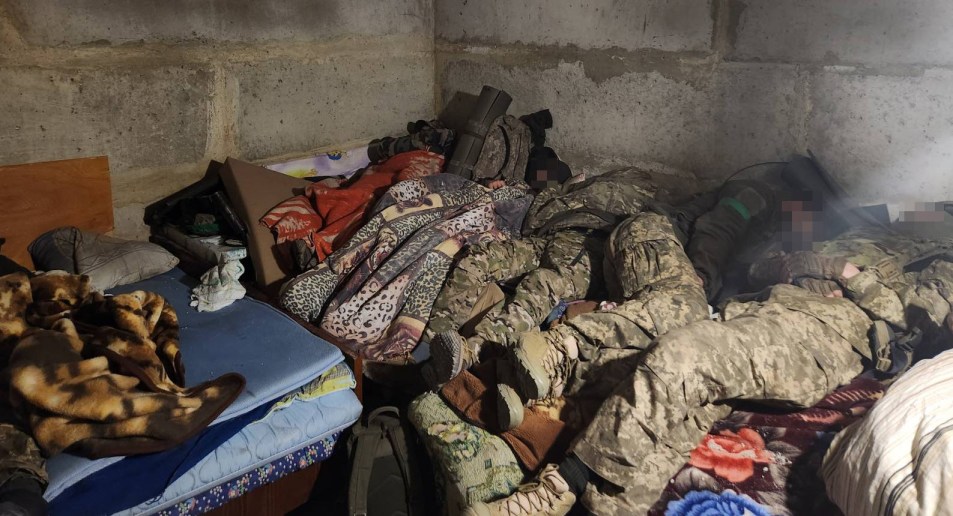
Robert says he often wonders what his life will be like after the war.
“I don’t think it’ll ever be the same again,” he says. “I don’t feel mentally traumatised by my experience here. But there was a point when I went home for a brief break last year, and I heard a motorcycle drive past. I don’t know why my brain did this — I knew it was a motorcycle, logically — but it sounded like artillery.
“There was a brief moment where I went: ‘How is there shelling in Melbourne? How is the war here?’ I already know that to an extent, I’m dealing with the mental toll of working here.”
‘Small number’ of Aussies in Ukraine
The two soldiers don’t know each other, but each say they are aware of about a dozen other Australians who had at some point served in Ukraine’s armed forces.
Department of Foreign Affairs and Trade (DFAT) officials told budget estimates last week the government was aware of only a handful of Australians who had gone to Ukraine to fight.
“We’ve had an indication from the Department of Home Affairs, from departure records, there is likely to be a small number of Australians fighting in Ukraine,” DFAT first assistant secretary Kate Logan said, adding the government believed fewer than 20 fighters had gone to Ukraine “for that purpose”.
“I want to say a small number, less than 20, that Home Affairs suspects have gone to Ukraine for that purpose.”
DFAT first assistant secretary Andrew Walter from the department’s legal policy division, under questioning from Greens Senator Jordon Steele-John, said it wasn’t necessarily illegal for Australians to fight for another country’s military.
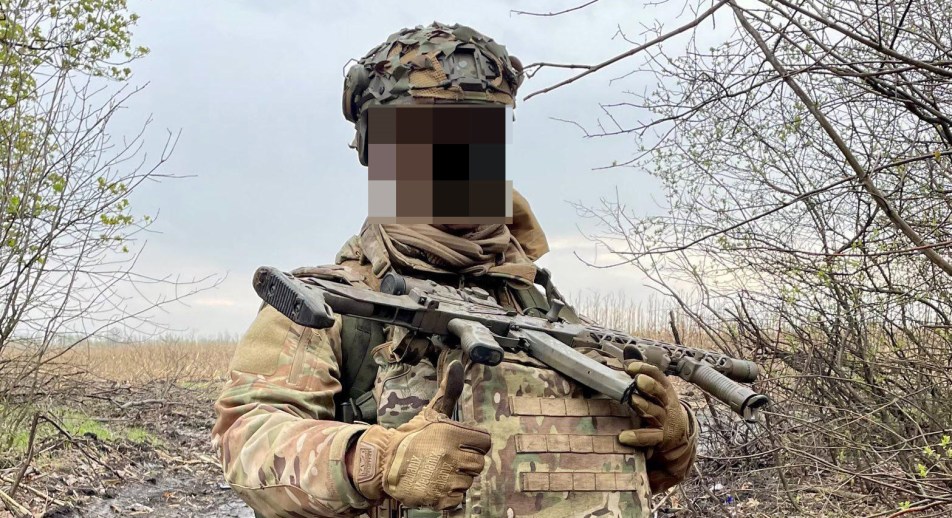
“There could be a whole range of legal risks that apply to an individual, however fighting with the armed forces of another country is not necessarily a criminal offence under Australian foreign fighter laws,” he told estimates. “However, you could potentially commit a criminal offence in the event you fought with a non-national fighting force — there can be risks there.”
World unites behind Ukraine
Russia’s war in Ukraine has been widely condemned by the international community, with many viewing it as an illegal land grab motivated by imperialism, Australian National University Centre for European Studies researcher Sonia Mycak says.
“Russia’s invasion of Ukraine has created the greatest geopolitical crisis the world has seen since the second world war,” Mycak tells Crikey. “[Russian President Vladimir] Putin never accepted the dissolution of the Soviet Union or the idea of an independent Ukraine. He does not accept that Ukraine has its own language, culture and identity.”
When Russia began its full-scale invasion last year, it expected the war to go much more smoothly than it did, she says. It had hoped its assault, from several directions at once, bombing cities and rolling in with tanks, would quickly overwhelm Ukraine. But Ukraine stood its ground and successfully defended itself, surprising both Putin and international observers.
“The West owes Ukraine a debt of gratitude,” Mycak says. “Should Putin be successful in any sense, we would be setting a dangerous precedent where a large and powerful neighbour can take over a smaller nation.
“Putin’s actions are really shaking the foundations of the world — we don’t want to be living in a world where a large neighbour can rape, torture and murder innocent people. We want to live in a world where people can live peacefully within their borders.”
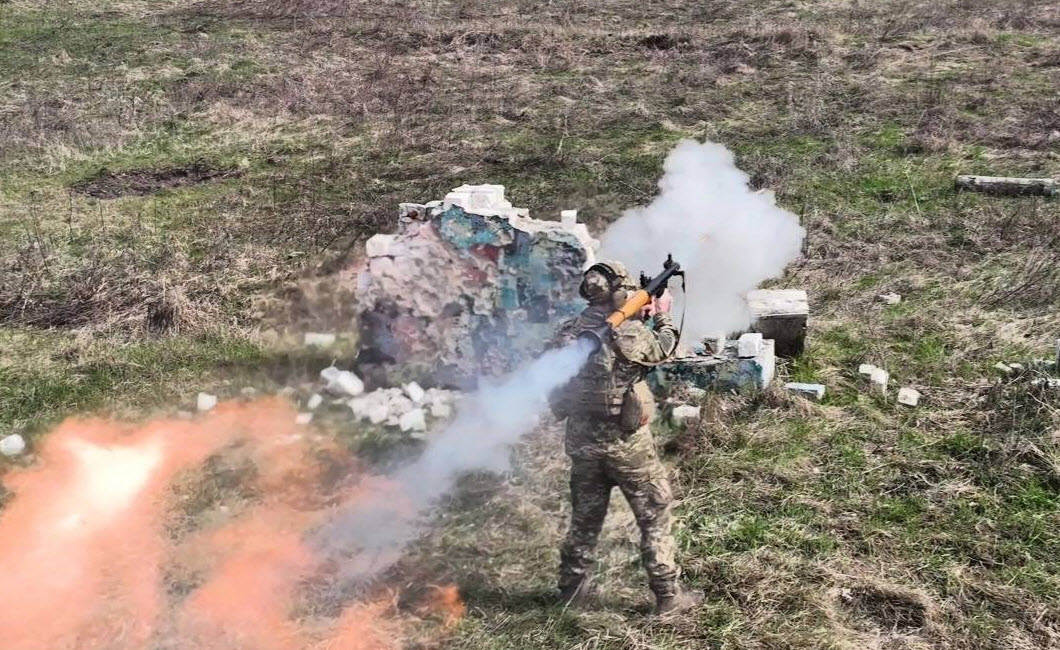
The invasion inspired action from all over the world, including harsh sanctions on Russia and military assistance for Ukraine. Australia, which says it’s the largest non-NATO contributor to Ukraine’s defence, has spent at least $510 million on assistance, including sending Bushmaster protected mobility vehicles and drones.
Ukrainian Defence Minister Oleksii Reznikov said at the weekend that Australia was preparing to give fresh aid in July, although Prime Minister Anthony Albanese has so far refused to confirm that. The Sydney Morning Herald reported on Tuesday morning the support package is likely to include a set of armoured cars known as Hawkei, which has been high on Ukraine’s wish list for months.
Holding the line
Robert says he welcomes Australia’s continued support for Ukraine, and hopes the public’s attention won’t fade as the war drags on: “The war hasn’t ended just because the media coverage has died off a bit — cities are being bombed daily with drones and missiles. It’s happening every day.”
Those strikes are happening all across the country, but it’s in Ukraine’s east, where both Australians are deployed, where most of the heavy on-the-ground fighting is going on.
On the front line, Ukrainian forces use abandoned buildings and trenches to set up defensive positions to hold the Russians back. Often the Russian positions are just a few hundred metres across no man’s land.
“We have AKs, machine guns and RPGs, and we hold the line and help spot and correct our artillery fire,” Joe says. “If the Russians are advancing, we need to obviously hold them back so they don’t break our line. And when our guys are shooting, we’re spotting to see where the artillery is landing and then trying to correct it to the right target.”
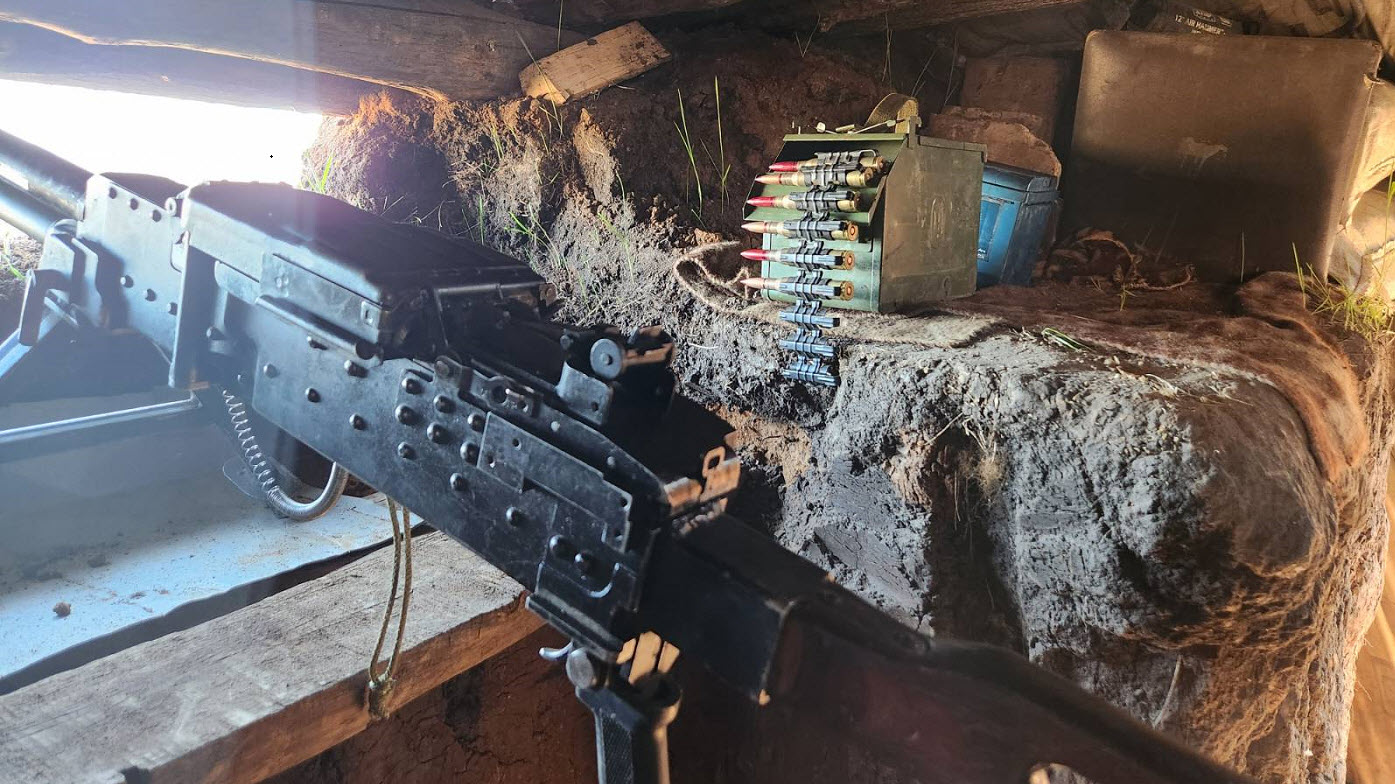
Robert says he tends to do missions on the front line that last a few days at a time — but occasionally as short as a few hours.
“The other day I was talking to my friend, we were in a forest, just lying on the ground, relaxing, as the Ukrainians fired artillery over us and the Russians were shelling nearby,” he says.
“I asked my friend, ‘Isn’t it strange you can just lie here, even though you can be killed at any moment, and have a certain moment of peace?’ He said: ‘If you don’t have that you’ll go crazy.’ I think over time you just adjust to the danger.”
‘I know I’ve contributed’
On the front line, the food of choice is ready-to-eat ration packs or a chocolate bar for quick energy, whereas in the rear, there is a wider variety.
“Volunteers deliver food for us, although it’s hard to get fresh fruit,” Robert says. “Guys go fishing in the river and cook fresh fish. It varies from week to week what stuff we get — the absolute luxury at the moment is having eggs. If you’re eating eggs you’re living the high life.”
Joe says he’s been nursing a squeezy pack of Vegemite that’s nearly run out, and has been craving Weet-Bix for breakfast: “That’s one thing I haven’t had at all and really miss. I’m going to buy that as soon as I go back to Australia.”
Robert has been in the war long enough to see the seasons change.
“Winter was not fun, I’ll tell you that,” he says. “Now everything is drying out, and it’s easier to dig and make positions. But summer has downsides too — there are lots of fires, and it gets sweaty wearing all the gear. It can be quite a miserable experience. Also fighting traditionally increases in the summer.”
Foreign volunteers have been told they can leave the defence force when they want. So when is the right time to quit? When will the debt be considered repaid?
“I don’t know when the debt will be realised, but I know I’ve emotionally fulfilled an obligation,” says Robert. “In some ways I already feel like I’ve done my part — I’m pretty burnt out.
“I know I’ve contributed; I know through my efforts I’ve helped kill Russians trying to destroy the country. There’s nothing keeping me here other than my own loyalties.”


‘Russia’s invasion of Ukraine has created the greatest geopolitical crisis the world has seen since the second world war.’
And yet the invasions and bombings of Vietnam, Laos, Cambodia, Iraq, Afghanistan, Libya, Syria, plus drone attacks across half of Africa and the Middle East are brushed aside as the ‘Rules-based order’.
Contributing to negotiations, no matter how difficult, before this disastrous war reached the point of no return might have lead to a better outcome. Joining in a fight rarely stops it.
How did Putin give Ukraine a choice on his invasion?
Meanwhile Anglo faux anti-imperialists demand Ukraine &/or US/NATO/EU settle for ‘peace’, while deflecting from Russia which continues to ‘peace all over’ Ukraine’s independence and EU aspirations?
Well done Drew!
I’d like to see how these people act if Australia were invaded.
Yes, that would be a terrible tragedy which should have been avoided – but accusations of “proxy war” won’t win anyone’s freedom back.
How utterly depressing that people can be so dangerously delusional.
The Guardian: For years, Putin didn’t invade Ukraine. What made him finally snap in 2022?
https://www.theguardian.com/commentisfree/2023/feb/24/vladimir-putin-invade-ukraine-2022-russia
Obviously don’t bother reading if you prefer your geopolitics black and white.
Putin thought the west was weak – and in many respects, it was.
Not any more.
You went ahead and read it anyway.
The alternative explanation is that the west accommodated Russia in all its horror for far too long.
The faux terrorist attacks in Moscow in 1999 were the beginning – this was Putin.
The sacking of Grozny in the 2000s, and support for Assad in Syria in the 2010s, followed.
The murders of Russian dissidents in the UK – using radiological and chemical weapons – and in the Tiergarten in Berlin, should have been further warnings.
Do not blame the west for Russia’s misdeeds or its current isolation.
Still lighting a candle for Stepan Bandera.
Who? This is 2023!
I could say you were lighting a candle for Josef Stalin, but would this be relevant?
You used the same ingenue in the wilderness drivel when pumping out hasbara B/S a couple of years back.
Why the insults? Who are you to criticise me? The freedom of Ukraine is far too important for that.
IMHO, on the matter of the war in the Ukraine, the Guardian group’s coverage appears to share the strong bias of most media, certainly of our ABC.
IMHO it would seem biased (in that reporting is of or from the official Ukrainian side with virtually none from the other), continuous (a minimum of a daily block of four items) and essentially uncritical of that side (no fact-checking or historical context), so risks amounting to war propaganda designed to promote support for one side (ignoring not least that the Ukraine’s population is itself divided). See for instance https://www.wsws.org/asset/4dda9b76-f63a-479c-854f-a6f353aa17bb?rendition=image1280 (noting that in accordance with my implicit position on fact-checking, critical analysis on the website that posted it accepted it to be a genuine celebration by a Ukrainian unit).
Likewise the use of human interest stories always of the noble Ukrainian resisting the barbarous Russian, stories well worthy of Ripping Yarns, Epics of Empire, or Boys’ Annual 1934.
Plus the exploitation of civilian casualties to demonise the other side, though for John Howard’s contrary position, see https://nla.gov.au/nla.obj-148271966/view
As distinct from the unbiased commentary of Tucker, formerly on Fox News, now on the cesspit of Twitter?
Interesting how those who protest the Murdoch press are lining up to support Russia!
You’re saying we should be excited? What does your one fellow supporter say?
What do 44 million Ukrainians say? Or should they have no voice?
Those thrown into the US proxy war meatgrinder certainly do not.
The population of Ukraine fell gradually from 48.3 million persons in 1973 to 36.5 million persons in 2022.
(A link for the figures was included in the original post but, of course, it has been AWAITENINGED so try google.)
Current guestimates are that >5M have skeddadled since then, including an interestingly large number of well connected, military age males, from west of the Dnieper.
The population of the Donbass and the east has not left and has now begun to increase – a peace dividend – since Feb 2022 when the Azov artillery and ground attacks, growing more intense since the 2014 coup, have ceased.
Avoiding war is to this day far less media-worthy than fighting one. War is exciting, to the many not involved. As we read here, an adrenalin rush for those not worried about the human cost of their high.
Certainly the West is not interested whether the Ukraine war was avoidable through diplomacy without undue harm to our – or their – supposed principles. It was. Austria has been neutral since 1955; is it poorer than the Ukraine, has it ever been threatened? Recall the Ukrainian Soviet Socialist Republic and its successor both formally adopted neutrality, from the dissolution of the USSR until the CIA-inspired Colour Revolution of 2014.
Then, 2014, is when today’s war obviously started; repudiating that neutrality led to successive escalation as the Ukraine sought to forcibly suppress separatism as part of alignment with the anti-Russian NATO/US bloc, breaking successive agreements in the process, now Russia has fought back.
Another (unmentionable) fact is that both the Ukraine and Russia are poorer and smaller than in the Soviet period. Erasing the USSR also created the oligarchs (in both), the ones whose money the West’s power-brokers were so happy to so enjoy for so long.
Complete “victory” is most likely to be a mirage, nor is it likely to last; such is the verdict of history. Diplomacy remains the only solution. We could even try it sometime, with China, too.
Yes, ask the Tibetans or Uighurs how that “diplomacy” is going for them.
So, you are a full spectrum f0kwit.
Why, because I am a humanist who opposes oppression, rape and murder in all its forms?
Glad to wear your title!
So Robert wasn’t a supporter of Pol Pot, then, despite the United States backing the Khmer Rouge? Or of the mujahideen in Afghanistan, for instance, when we were supporting them burn schools and murder teachers? Or of Suharto, when he was murdering a quarter of East Timor’s population?
No I wasn’t – none of the above.
In fact I was deeply concerned over East Timor, and South Africa.
btw, I was a small child during the Khmer Rouge regime – supported by China – a bit rich to hang that on me!
Your whole argument seems to be that the US has done bad things, so Russia and China are allowed to do bad things. Really? Why not oppose all imperialism, and self-determination for all peoples ? At least that would be logically consistent.