
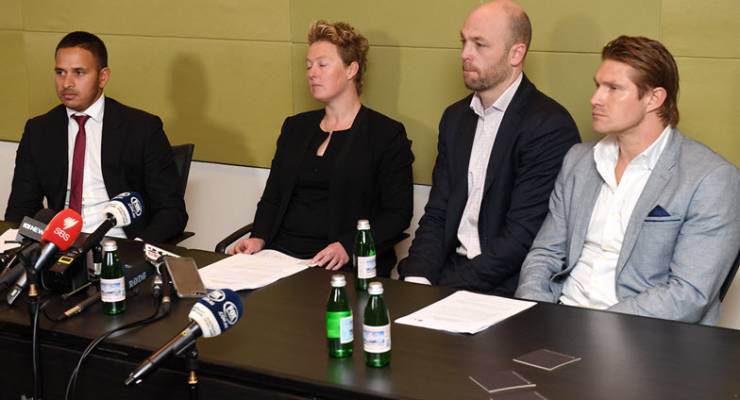
The pay dispute between Australian cricket administrators Cricket Australia (CA) and the players’ union the Australian Cricketers Association (ACA) has been a long and enduring saga. The impasse between players and administration over the structure of the new memorandum of understanding (MoU) has left 230 players unemployed since July 1. The ACA announced this week that male players selected in the “second” national squad — Australia A — would not partake in the upcoming tour against South Africa, the first time Australian cricketers have ever boycotted a tour. Players are also threatening a possible boycott of the 2017-18 Ashes series if an agreement cannot be reached.
So what exactly is the pay dispute over? And is a solution close to being reached?
What is the dispute actually about?
CAs want to put an end to the current fixed-revenue-sharing model, which has been in place since 1998. ACA wants to keep the current model, as it protects both domestic and international players. The ACA wants to undergo mediation in order to reach an agreement, but CA has rejected these calls twice, instead attempting to negotiate with players directly, frustrating players and the ACA. Players are saying the ending of revenue sharing would be a sign of a loss of respect — whereas CA believes the current model is not viable. The players say they are happy to take a pay cut on the assurance that the new MoU will include, in some way, a similar structure of a fixed-revenue model. Both sides are holding firm, stalling any discussion to resolve the dispute.
What has Cricket Australia offered to the players?
CA offered a fixed amount to all male and female players totalling $419 million over five years. It’s an amount that CA says is an increase in payments for each individual on their current salaries. The offer would end the current revenue-sharing model except for international male players, who would still gain a share in the surplus revenue. Current players, including those who represent Australia internationally, believe the offer is disrespectful to domestic and female cricketers. It’s also interesting to note that CA chief executive James Sutherland has not entered into the negotiations, rather allowing CA’s head of strategy Kevin Roberts and CA chairman David Peever to lead the charge. ACA president Greg Dyer said: “James Sutherland has been strangely absent to date from these negotiations and we want him involved, we want him engaged.”
What is the revenue-sharing model?
The revenue-sharing model that has been in place effectively gives all cricketers a portion of the revenue irrespective if they play international cricket or not. This means they are equally entitled to the growth in revenue which saw domestic cricketers’ revenue rise by 53% over the last five years. The proposed CA model however, would mean domestic and female players’ salaries would not include any of the expected growth in revenue. A condition that players David Warner and Ed Cowan believe is unacceptable. Cowan says the MoU is not about money but being seen as partners wanting to enjoy promoting the game. Cowan believes without the revenue-sharing model, players are seen as employees who will be less invested in trying to help grow the game.
Why does Cricket Australia want to break up the current revenue-sharing model?
According to Sutherland, CA doesn’t want to abandon the current model but instead “modernise” it. CA believes the sudden growth of the game means the current model doesn’t provide a realistic share of revenue. CA’s proposal says “without changing the 1990s revenue share model, domestic men payments could reach an unviable level that cannot be justified by benchmarks from other sports and would deny increased funding for grassroots cricket”.
CA say it wants to allocate more funds into grassroots cricket around the country. Sutherland says that the organisation needs to raise about $76 million over the next five years in order to make a difference and changing the model will help with that. But the ACA also backs the need to invest in grassroots cricket, itself proposing a 22.5% revenue share — a greater amount than that proposed by CA.
What industrial action has happened so far?
As of today, the first industrial action has occurred with players in the Australia A squad cancelling their tour to South Africa. Seventeen players, including prominent test stars Usman Khawaja and Glenn Maxwell, will not compete in the tour, a decision that could harm their chances of selection for the Australian team. The ACA says by striking, players have “sacrificed their own ambitions for the collective; an incredibly selfless act that shows their strength and overall commitment to the group”.
The women’s national team is still currently playing in the International Cricket Council World Cup as agreed upon, with no strikes planned during what is an extremely important tournament for them.
Will the Ashes still go ahead?
We don’t know for sure yet. But vice-captain David Warner has said that an Ashes boycott is possible. It’s a scenario that Federal Sports Minister Greg Hunt says will not happen. Hunt says he will ensure mediation occurs if the dispute continues, but also that he believes the two parties will come to a resolution as no one wants the Ashes abandoned. “The players love playing for Australia, Cricket Australia knows this is not just fundamental to sport, it is part of our national identity. I’m very confident they will reach an agreement,” Hunt said.
ABC journalist Tracey Holmes says that several sponsors and a broadcast deal also remain in the balance without a top international cricket team present. “It remains to be seen how much Cricket Australia can extract for the sale of a product it officially no longer has much control over,” she said.
What are the next steps?
For the unemployed players, the ACA has set up a fund to help anyone who is struggling financially. For a select few who want to play T20 competitions abroad, CA has come out strongly saying it will block anyone who attempts to earn money in any unauthorised ICC domestic competition.
If a new MoU is not signed, players will remain uncontracted and therefore not obliged to compete in the upcoming Bangladesh test tour in August and a one-day international series against India in October, leaving both series in serious doubt. A possible solution for further series, including the Ashes, would be for players to be subcontracted so they can avoid further cancellation of tours. A strategy ACA chief Alistair Nicholson says players are open to until a deal is reached.


I wish I could give a damn, but I don’t. Apart from 20/20 cricket is a dying game.
So sorry. So, so, sorry.
No.
Several things. A number of self important prats who think they are Bradman, Miller and Benaud all in one body, but who turn up about every three games and already make far too much money. They complain about the hard schedule, but piss off to India at the drop of a hatful of rupees. They disgrace the ones who are both skilled and persistent (the ones not speaking so loudly). Opposite them is a dimwit CEO who has overseen one catastrophe after another, gutted the grassroots, stuffed interstate cricket and overseen utter incompetence in injury management along with the HP manager. Get rid of these clowns and remind the ACA that the revenue share will get mighty thin if they do not lift the performances. There are about five male [layers who consistently give it everything every time. Loudmouth Warner is not one of them, so the ACA would be advised to get a different mouthpiece. I have been wanting the CEO’s and HP director’s heads for years, due to an unreasoning love of proper cricket.
I have to laugh about the statement by the players’ rep that they want a “partnership” with CA. If that’s the case, they’d have to share the downside together with the upside, i.e. Not only share in the profits but dig into their own pockets if CA makes a loss to keep it afloat. Somehow I don’t think that the players really want a partnership, they just want a risk-free bonanza.
Revenue sharing is risk sharing. The players seem to appreciate that there could be a downside if revenues fall – which given the parlous state of free to air TV is not impossible.
Revenue sharing isn’t risk sharing, as it’s predicated on revenue always being in excess of expenses, which as any business knows is not always the case. And it’s revenue, not profits we’re talking about here. If players were at risk of bearing losses as well as profits, it would be different.
Good grief. Shane Watson as a representative of the ACA? Is it not that they or him realise he is a pretentious, under-achieving, over-hyped joke of someone the sporting public of Australia could identify with? While ever the likes of Watson and his ilk are out there putting the “hard done by” line, the ACA has got no chance!!! It’s come uppance time Shane!! Thanks for nothing.
Ignoring your sledging of Watson (because it’s irrelevant), when have the players said they are hard done by? In fact top echelon players would be much better off under CA’s proposal.
It looks more like a union busting exercise to me.
A board with the likes of Peever (ex-Rio Tinto) and Avery (ex-Wesfarmers), with their dispositions toward unions……?