

Note: the following article contains descriptions of torture.
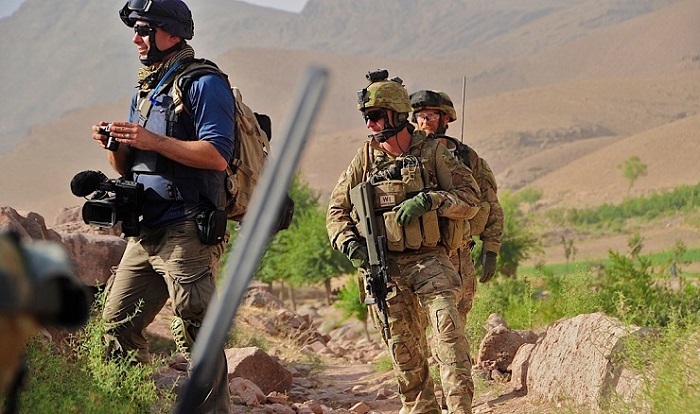
It took Lebanon’s security services 72 hours to break Australian cameraman Ben Williamson. He was tortured in the line of duty but no longer feels his employer, Nine Entertainment Co, has his back.
Almost five years ago to the day, Williamson was arrested when a 60 Minutes attempt to snatch two children off the streets of Beirut and reunite them with their Australian mother, Sally Faulkner, went horribly wrong. Williamson as the cameraman had the job of recording the drama and raw emotion.
It was meant to be a sure-fire ratings winner. Instead it ended in ignominy for 60 Minutes as its crew of four including reporter Tara Brown were held on kidnapping charges for a fortnight while Nine attempted to staunch an unfolding public relations disaster back home.
The nightmare has never ended for Williamson. A big man who would run through brick walls if that was what the job demanded, he now has days where he can barely lift his head from the pillow. The sounds of a bustling cafe make him anxious. The panic attacks while driving. The short fuse with his wife and children. The nights without sleep. The constant headaches.
Isolated from friends and colleagues he has been ashamed to let on who he has become — and why. It’s left him, at the age of 42, to contemplate a future in which he may never work, and perhaps never be himself, again.
Williamson’s plight is in the hands of an insurance company, GIO, which insists Nine has no responsibility for what happened to him in Beirut. In fact, they’ve informed him that whatever went wrong was down to him. And anyway, he should have put his claim in sooner, before a three-year time limit.
Williamson has been forced to relive the horrors of Beirut again and again in the rooms of psychiatrists and lawyers as GIO has made him jump through legal hoops. He just wants the torment to stop.
So what really happened in Beirut?
The Williamson story is a stain on the Nine Network.
Williamson has largely kept the detail of what happened after his arrest in Beirut to himself. He hasn’t wanted to bother others. Besides, he tells Inq, the other members of the crew also had a rough time. None, however, quite as rough as his.
Lebanon’s police singled him out because they believed he was actively involved in kidnapping Faulkner’s children. Alone of the 60 Minutes crew he was at the scene of the abduction — the others waited at a distance.
There was a personal edge to the kidnap, too, which made the crime even more heinous in the eyes of Lebanon’s officials: the children’s father, Ali Elamine, was related to a powerful member of Lebanon’s parliament, a political strongman with close links to Hezbollah. The religion-based militant movement acts as a state within a state in Lebanon and has a record of administering violent justice on its own terms.
As Williamson tells it, he was separated from the 60 Minutes group within hours of their arrest and after all four had been interrogated. What proceeded was 72 hours of torture.
Early in the morning while the others remained handcuffed together in a police station in central Beirut, Williamson was bundled into a car by Lebanese security. He was seated in the back seat with his hands cuffed tightly behind his back and with no seatbelt. Police sat either side of him with shotguns placed on the inside of the doors.
He was taken on a terrifying high-speed drive on a winding road outside Beirut. The car reached speeds of up to 140km/h and then would suddenly brake, sending him hurtling into the dashboard, smashing his neck and shoulders. Alternatively he would be buffeted from side to side as the car suddenly veered around bends. As he was unable to comprehend Arabic, the only word he recognised was “Hezbollah”. He also remembers the police taunting him. He believed he could be killed at any minute.
The ride in the dead of night brought Williamson to a new police station. He was dragged out of the car and pulled backwards up stairs. He was stripped naked and made to bend then squat up to 20 times in front of police. It was “total humiliation”: “I felt completely vulnerable. I didn’t know where I was. I thought it might have been a Hezbollah place.”
Still naked, Williamson was ordered to sit at a desk with his hands placed in front of him on a table near a portable burner: “My mind was going crazy. I wondered if I was going to be tortured with the burner.”
Police hit him with rifle butts. He was interrogated and then placed in a cell, now with his clothes back on.
Williamson remembers the cell as being “extremely small”. He was forced to share the space with a young man and an older, bigger man who he remembers had one eye. Both were stripped to their underwear. Williamson recalls a feeling of menace. To protect himself he lay hard up against the jail door, concerned he may be raped: “I don’t remember exactly how long it was. It felt like an eternity.”
The next morning he was returned to the first police station to rejoin the other members of the 60 Minutes crew. He and the two other men in the crew were placed in a three-by-five-metre cell, with 20 others and only one toilet.
Although the physical assaults were brutal, it was the psychological assault that overwhelmed him. By day three the police had found photos of Williamson’s two daughters, then aged five and eight, on his phone.
“They came to the door of the cell and called me over. They held the photos up so that I could see them through the grille. That’s what did it for me. They got my weak spot. Something happened to me that has never happened before. I just began weeping uncontrollably. Here I was this big man in a cell with Syrian and Lebanese criminals and I had revealed my weakness in front of them. It completely broke me and I just couldn’t stop it.”
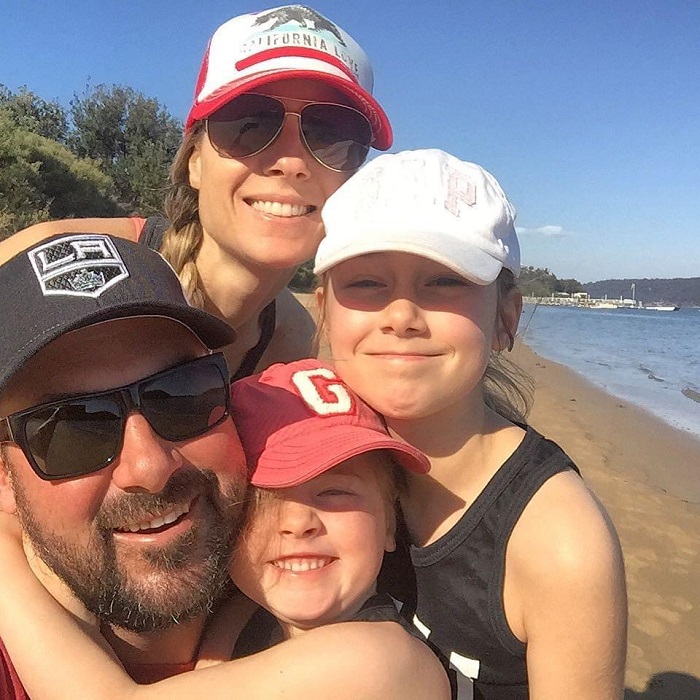
Williamson says the police taunted him by returning “multiple times” with the photos of his girls.
“‘You should never have come to Lebanon,’ they were saying to me. ‘You’ll be in prison for 20 years.'”
Much of this was done in the hours before the Australian consulate in Lebanon became involved. It happened far from public view and was carried out by a security apparatus which functions as a law unto itself.
So was it torture?
Williamson’s treatment meets the definition of torture as adopted by the UN’s Convention against Torture and Other Cruel, Inhuman or Degrading Treatment or Punishment which defines torture as “any act by which severe pain or suffering, whether physical or mental, is intentionally inflicted on a person” to obtain “information or a confession” or to punish a person for an act he or she has committed or is suspected of having committed.
Amnesty International defines it this way: “Torture is when somebody in an official capacity inflicts severe mental or physical pain or suffering on somebody else for a specific purpose. Sometimes authorities torture a person to extract a confession for a crime, or to get information from them.”
Williamson’s ordeal is different from the experiences of most other media professionals who have suffered post-traumatic stress disorder (PTSD). In these cases the trauma has typically come from covering the horrors of war and natural disasters.
To date Williamson’s attempts to have Nine come to the party on compensation which reflects the damage done has been stonewalled by GIO. Williamson has been on the drip of a weekly workers’ compensation payment, set at a percentage of his salary as it was in 2015. The payments can stop altogether depending on new psychological assessments he has to undergo, creating a perpetual sense of insecurity. He also received a modest one-off payment.
GIO has decided to dig in on Williamson’s claim for work injury damages, a common law action covering past loss of earnings and future loss of earning capacity — an amount which might run into the hundreds of thousands of dollars given Williamson’s age. The case, started by his lawyers last year, may see him forced into battle with lawyers in the New South Wales District Court.
GIO contends there was no negligence by Nine, even though the assignment was set up by 60 Minutes. Adding to Williamson’s torment, GIO has turned the tables and is understood to be blaming him for failing to take proper care in how he performed his work. It is also blocking the case on the grounds that Williamson failed to lodge his claim within three years of the events of April 2016.
Denying liability might be a standard procedure in such cases, but it has proven devastating for Williamson, already exhausted by his PTSD. For its part Nine has not so far intervened. In a statement provided to Inq (which you can read in full here) the company said Williamson was “a valued member of the team” but that it was “not in a position to make comment” on his insurance claim.
A spokesperson for GIO said that the insurer was unable to comment on specific details due to confidentiality. “We can confirm that GIO is working with Mr Williamson and is committed to supporting him through this process,” the spokesperson said.
Tomorrow: how Nine’s crisis management protected the brand at all costs.
David Hardaker has worked as a producer at 60 Minutes.


“Williamson was arrested when a 60 Minutes attempt to snatch two children off the streets of Beirut and reunite them with their Australian mother, Sally Faulkner, went horribly wrong.”
What was done to Williamson is obviously torture and totally dreadful. I hope he gets some proportionate compensation. But things did not go begin to go wrong when the kidnap failed. It all went “horribly wrong” much earlier when an Australian TV company conspired with mercenaries to organise a violent crime in a foreign jurisdiction in the hope it would provide some entertaining film footage. This crime included assaulting with a pistol the children’s grandmother as they all walked near her home with another woman. The whole enterprise was appalling.
My sentiments exactly, represents what’s wrong with Australian media and the values it promotes through entertainment content for legacy media viewers.
In a foreign constituency pushing the law (for same entertainment), creating antipathy towards the culture of ‘immigrants’ (non European vs. Anglo/Irish), Lebanon, Mid East, Arabic speakers and (all) Islam behind a thin veneer of journalism, gender and rights.
The xenophobic factors were the driving influence or inspiration for the story to help both ratings and nudge (older) voters towards LNP’s tough immigration, refugee and border policies.
Hi Drew — Please my comment above
Dean, I think SSR is identifying the guilty party as Nine, not Williamson.
At least that’s how I took it, before I pressed ‘like’.
I would urge Sinking Ship Rat (Real name?) and the 28 people who liked the comment to focus on what matters: Ben’s PTSD and the impact this is having on his life and family. Don’t be quick to judge Ben. I seriously doubt he came up with the idea for the 60 Minutes story or made the decision to fly to Beirut. I’m sure every single one of us has found ourselves in morally dubious situations and wish we had spoken up, stepped away or made a different decision. We don’t know how this aspect of the saga has affected Ben. I don’t know Ben personally. But I know he put his life on the line for many years for Channel Nine working in the Middle East. For Channel Nine to now treat him like this is scandalous. Please folks, show him some compassion. Dean Yates/ex journalist with PTSD.
Dean, which bit of my post could you not understand? Did you miss my first two sentences: “What was done to Williamson is obviously torture and totally dreadful. I hope he gets some proportionate compensation.” Did you read the rest? What is your point?
I did read those two sentences. “Proportionate compensation” sounded highly qualified to me. It implied judgement of Ben, which was how I took the rest of your post, judgemental. I know you said “Australian TV company” and “whole enterprise”, but Ben was part of that enterprise and is thus implicated. I felt he was tarred by what you said and that was unfair. That’s my point. Try to put yourself in his shoes. How you would feel? I am sure Ben is reading these comments.
As you say “Ben was part of that enterprise and thus implicated”, there we agree.
The alternatives to proportionate compensation are either over-generous or inadequate, both by definition unjustified, so I still do not see the problem or that anything was unfair
For clarity … unfair in my comment – the way Williamson is being treated by his employer and its insurer is of course grossly unfair.
I was taught in the Army that if caught and threatened with torture to tell your captors everything you know. The odds are you don’t know enough to make a difference or if you do know enough and it’s known you have been captured then the plan will be changed.
No plan is worth being tortured for.
A startling example of the way insurance works against claimants. This is not an exceptional case. It just got reported.
Poor bastard (PB) not only left holding the can after 60 Minutes didn’t even check to see if the mother’s computer wasn’t being used to spy on her, which it was.
Now GIO can’t see that being in the hands of Hezbollah, might give you PTSD. They were waiting for them to turn up.
The whole thing was a cock up from the word go, because Sally Faulkner didn’t know that her laptop could be used to spy on her and 60 minutes didn’t check..
insurance companies:
A] parasites
b] arseholes
c] totally evil
d] all of the above
D. Definitely D!