
Even in the most significant sharemarket correction since the Great Depression it appears that directors have been reluctant to show any restraint in the payment of remuneration and termination payments to executives.
Telstra last week announced that it sought to “correct highly inaccurate statements in the media around the CEO’s exit payment. Mr Trujillo is eligible for an exit payment of $3 million when he leaves the company on 30 June, 2009″.
It is ironic that Telstra sought to correct “highly inaccurate statements” with a highly inaccurate statement. Trujillo told media last week that he was retiring in order to spend more time with family — it was clear that Trujillo was not terminated by Telstra. In defending Trujillo’s $3 million golden handshake, Telstra claimed that “Sol’s entitlements, including the calculation of the payment to be made to him when his contract terminates and his annual salary and related performance incentives, are stated in his contract which has been lodged with the ASX and is publicly available.”
However, Trujillo’s employment contract clearly provides that he is only entitled to a “termination payment” if he is terminated by Telstra or chooses to terminate his own employment with “good reason” (good reason is defined to include a change in responsibilities or a breach by the company). Trujillo did not satisfy the definition of good reason and therefore, was not contractually entitled to termination payment. It appears that Telstra invented the term “exit payment” last week to create some sort of fictional entitlement to ensure Trujillo didn’t leave empty handed. Telstra, however, is hardly alone in spending shareholders’ funds on “termination payments” to departing CEOs which are not legally owed. While current Pacific Brands CEO Sue Morphet has been criticised for receiving a $1.2 million pay rise while planning to sack 1850 workers, her predecessor, Paul Moore, received a $3.48 million “termination payment” after he resigned 14 months ago. Pacific Brands’ share price has slumped by more than 95% since his departure. In fact, the list of largest termination payments since 2004 (compiled by RiskMetrics) shows a correlation between shimmering golden handshakes and low shareholder returns:
|
Executive |
Company |
Termination Payment |
Share price change since departure |
|
John Ellice Flint |
Santos |
$ 16,812,187.00 |
6% |
|
John Alexander |
Consolidated Media |
$ 15,000,000.00 |
-51% |
|
Owen Hegarty |
Oz Minerals |
$ 8,350,000.00 |
-76% |
|
Tony D’Aloisio |
ASX |
$ 7,779,159.00 |
-22% |
|
Mike Tilley |
Challenger |
$ 6,000,000.00 |
-54% |
|
Michael Chaney |
Wesfarmers |
$ 5,300,000.00 |
-56% |
|
Paul Anthony |
AGL |
$ 5,118,840.00 |
-10% |
|
Malcolm Broomhead |
Orica |
$ 4,788,100.00 |
-7% |
|
Anthony Palmer |
Newcrest |
$ 4,400,000.00 |
34% |
|
Kim Edwards |
Transurban |
$ 4,060,201.00 |
-32% |
|
Fred Hilmer |
Fairfax |
$ 4,000,000.00 |
-78% |
|
Duncan Fischer |
Tattersalls |
$ 3,567,556.00 |
-15% |
|
Matthew Slatter |
Tabcorp |
$ 3,209,589.00 |
-62% |
|
Andrew Scott |
Centro |
$ 3,000,000.00 |
-88% |
|
Roger Corbett |
Woolworths |
$ 3,000,000.00 |
45% |
|
David Murray |
CBA |
$ 2,400,000.00 |
-22% |
Source: RiskMetrics
While Woolworths’ share price has increased 45% since Roger Corbett’s retirement, and Santos and Newcrest have benefited from higher gold and coal-seam methane valuations, the majority of the executives listed left their companies in a perilous state while departing wealthy men (and they’re all men). Tony D’Aloisio, the current head of ASIC (the organisation charged with defending investor rights), received a termination payment of $7.8 million after he stepped aside to allow Sydney Futures Exchange boss, Robert Elstone, to take over the merged entity. Since his resignation, the ASX share price has dropped 22% and its monopoly status is under threat due to poor performance in relation to insider trading and continuous disclosure. Despite new CEO Chris Lynch repudiating his business plan and profligacy, former Transurban CEO, Kim Edwards, received a retirement payment of more than $4 million. Similarly, former consultant and Fairfax chief Fred Hilmer was gifted $4 million by the Fairfax board upon his departure. Since then, Fairfax’s share price has slumped 78%. Oz Minerals decided to pay Owen Hegarty $8.35 million last year for his contribution to shareholder growth — since then, the Oz Minerals share price has slumped 78% and may have fallen to zero but for a takeover bid from Minmetals. Investors must place a large degree of trust in their directors and executives. However, when those company directors authorise significant, unnecessary and un-contracted retirement benefits to their outgoing CEO that trust is irrevocably broken. While regulation of wages and benefits is not necessary beneficial, company directors have shown through excessive remuneration and unnecessary termination payments that they simply cannot be trusted as safe-keepers of shareholder funds.


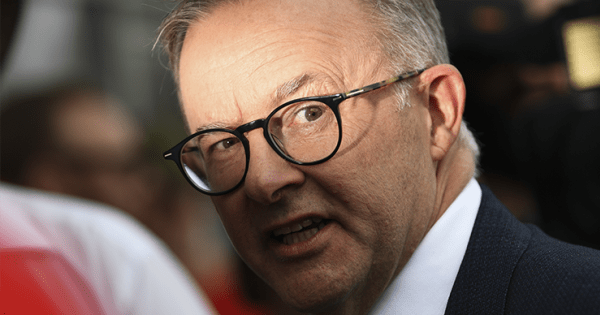
Wayne Swan has echoed Peter Costello in wringing his hands over the excesses of corporate pay. It is about time someone in government had the balls to do something about it.
Ross Gittins offered a solution recently: “If it had the courage, the Rudd Government could register the community’s disapproval by removing the company’s tax deduction for salaries in excess of, say, $1 million. Or salaries in excess of $1 million could be taxed in the executive’s hands at the penalty rate of, say, 60 per cent.” I can only say, bring it on. Better still, do both. I’m sure it would be hugely popular.
Adam says that, according to Sol’s contact, a termination payment was payable for “good reason”. He then goes on to pronounce definitively that there was no “good reason”. How would he know? It seems to me Sol’s considerable US based assets becoming subject to Australian taxation if he stayed here longer than four years is a pretty good reason to leave.
And anyway, this was always going to be a c*** of a job. The Telstra CEO handling full privatisation was never going to make many fiends and had to be hard-nosed. Think of it, you had an environment of unstable telco share prices, T3 shares dumped on the market undermining the share price, a confused regulatory environment and contradictory public policy in relation to infrastructure sharing which saw a disproportionate share of risks and costs held by Telstra as opposed to its competitors. As well as a workforce geared to maintain publicly owned communications infrastructure – no longer its role – and which needed to be shorn to reflect labour-saving new technologies. Finally, we had a Government that wanted to and did sell off the company but burden it with with public interest provisions that could only undermine its share price and hobble strategic agility. The Government wanted its cake and to eat it as well.
There’s lots I don’t like about Telstra and its privatisation but a $2 million (about US $1.3 million) CEO payout after four years in that cauldron isn’t just a diferent ball park to some of the payouts listed above, its a different sport.
It doesn’t matter who you are if you are allowed to raid the cookie jar that’s what about 90% of the population would do.
The problem is that there is no restraint on these raids, the remuneration committees have a vested interest in handing out cash and share entitlements. You scratch my back etc. etc.
Pay rises should be justified to the owners of the company, you know , the owners ie shareholders. A decent proposal cogently argued would see CEOs and directors adequately rewarded, if not they could vote with their feet.
After all that’s what the poor bloody workers have to do.
There should on no account be rewards for failure!
Damien – if CEO of Telstra is a “c*** of a job”, they certainly picked the most appropriate person 😉
Executive remuneration is a matter for the shareholders..they do not mind when the share price is rising but they do mind when it is falling. They can vote the guy out or vote against his package, Trouble is of course that major investors control the big corporations in cross ownership arrangements and they may have a vested intersted in ensuring the CEO is dependent on them in terms of his salary. I dont know what the answer to that is – if you are small and dont want to be kicked around then dont invest in these kinds of companies unless you are prepared to be buffeted.