

The Wild Rivers Act has been a contentious topic since it was introduced in 2005. Opposition leader Tony Abbott now wants it scrapped, but Queensland premier Anna Bligh is standing firm.
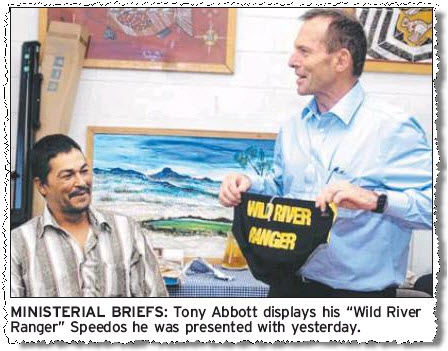
Noel Pearson and others say it stifles economic opportunities. But Abbott’s tour of the region yesterday was met with hostility from many — The Carpentaria Land Council calls his plan “shonky” and dubbed him a ‘Wild River ranger’.
So why are there so many split opinions over Queensland’s pristine river systems? Before the proposed changes hit parliament next week, Crikey thought we’d clear a few things up about the existing legislation.
How does the Wild Rivers legislation work?
It basically allows river basins across Queensland to be government protected through a “wild river declaration“– a statutory document that aims to preserve the rivers which remain largely in their natural state. These declarations outline the locations and conditions under which new developments can happen in the wild rivers area. They provide the guidelines for ecologically sustainable development by applying different levels of protection across the basin.
This means that, in areas of higher protection, developments like mega-dams and intensive irrigation cannot go ahead. While declarations do not prevent new development altogether, they do ensure that any development will not impact on the health of the river. Existing activities such as grazing and fishing are able to continue.
Why do certain land areas need protection?
Queensland is home to some of the healthiest river systems in the world. These systems support regional economies and provide habitat for a diverse range of wildlife. According to the Wilderness Society, unpolluted systems such as these are becoming increasingly rare on account of irrigation damage and destructive mines causing various environmental problems.
Which river systems are currently protected?
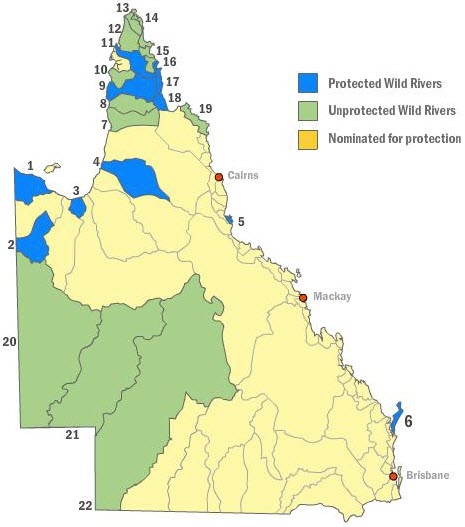
The first official Wild Rivers were declared in 2007. These systems include Settlement Creek, Morning Inlet and the Gregory and Staaten rivers, along with the waterways of Fraser and Hinchinbrook islands. As well, after years of debate, the Queensland government declared the first three river systems on Cape York Peninsula — the Archer, Stewart and Lockhart basins.
What sort of process do the declarations go through?
Without community consultation a declaration can’t go ahead. Once the government has released a draft declaration, including maps outlining the proposed protection areas, a formal community consultation begins. This gives people the opportunity to lodge submissions and negotiate directly with the government before any amendments are made. But in recent years there has been a lot of discussion outside the formal process.
The declaration of the three rivers on the Cape in April last year took more than three years of ongoing consultations between the government, conservation groups and indigenous organisations and resulted in amendments being made to the legislation.
Why are people against the Act?
From an indigenous perspective there is concern about the affect of the legislation on traditional owners who wish to develop their land. Cape York leader Noel Pearson believes traditional owners are being denied the opportunity to make decisions about the use of their land, subsequently hindering economic development among indigenous people. Yesterday, he told The Australian the Queensland government was using the Act as a “Trojan horse for locking up the land from development”.
There has also been controversy over the consultation process implemented by the Queensland government, with some Aboriginal communities concerned their views on the legislation haven’t been taken onboard.
Does the legislation impact on Native Title rights?
After meetings with the Cape York Land Council in 2007, amendments were made to the Wild Rivers Act to ensure that the declaration process does not impact upon the right to exercise native title. The legislation now recognises native rights — allowing traditional hunting and ceremonies to go ahead. It also permits controlled access to their land and has specifically identified a water reserve for indigenous people.




Wild Rivers protection is one of the few things on which I wholeheartedly agree with the Bligh government. In conversation here in Brisbane I have heard no objections or opposition whatever to it.
Can someone please explain what Abbott’s motivation is by sticking his oar in to negate our state government’s legislation? Why meddle with Queensland, we’re already getting abundant grief from the Bligh government on privatisation-of-just-about-everything.
If the Gillard government is so allegedly woeful there should be plenty federal issues to otherwise demand Abbott’s lightweight attention.
One more “power point”? What about “Who stands to profit from it being overturned – and their connections”?
Fortunately the village idiot isn’t wearing the bludy things, yuk.
your tips and rumors item on Wild Rivers reads that Abbott had “very little support beyond that of Noel Pearson and Liberal Party stalwarts”.
That should have read “Noel Pearson and OTHER Liberal Party stalwarts, including ABC Far North Queensland, which acts as the party’s media unit.”
Dead right Klewso: it’sa NOT a coincidence that Pearson’s backers include a pastoralist and other big southern businesses that are just itching to get their dirty hands on these rivers for commercial purposes.
And I wonder who one of the biggest beneficiaries will be?
And despite being repeatedly asked to cite an example of a proposed enterprise unreasonably blocked, Mr Pearson cannot come up with even one, but continues with his bombastic, belligerent attacks on Wild Rivers on ABC Far North. My Aboriginal friends here on the Peninsula do not want his involvement in their affairs – not in native title or property re-acquisitions, not in education or health, not in so-called Welfare Reform – and he controls quangos for each of these areas.
The only development stopped by Wild Rivers – we hope! – is the destructive proposal to stripmine the Wenlock for bauxite, a plentiful low-value ore already being exported from Weipa.