
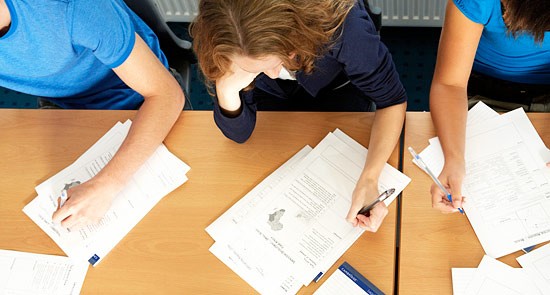
The results from the latest round of international tests are worse than expected and expectations were already low. Assessments released earlier in the year showed that things were not going as well as they had or should at the secondary level. Now we see that things are even more worrying in the earlier years.
We could worry about coming 27th in Year 4 reading, or 25th in Year 4 maths, or 12th in Year 8 science, but the real worry is that up to a quarter of the kids tested can’t read, can’t do simple maths and can’t understand the most basic of scientific concepts.
It is possible but highly unlikely there has been a glitch in the testing or the analysis. It is also possible but very unlikely that these tests of a small part of the curriculum give a misleading picture of things in general. After all, these are the “basics” in the sense that they matter in themselves and in the sense that if you can’t do them you can’t do much else either.
More troubling still is the fact that we know what needs to be done and also know that it won’t be.
In the short-to-medium term the answer is in helping teachers to be better at their job. In the medium-to-long term the task is in a technology-rich re-engineering of the student and teacher working day.
Both will happen, but only where they are least-needed, in schools with lowest levels of educational need and deepest pockets. The big systems, and particularly the government systems, are not capable of doing what needs to be done. Schools need to make much better use of the money they already have as well as get more money of the Gonski kind.
To take one example: the best way to increase the effectiveness of the existing teaching workforce is through in-school feedback, mentoring, and coaching. But as the Grattan Institute has pointed out, that means trade-offs — bigger classes and/or fewer classes to free up the necessary teacher time.
Another example: it is clear that the best way to build “teacher quality” over the longer term is to pay them more — a lot more. But in any foreseeable budgetary climate that can’t be done without biting the bullet of “class sizes”. One recent US calculation found that if each classroom were to contain five more students every teacher could get a 30% salary increase, which is somewhere near the necessary order of magnitude. Australian research by ANU economists Andrew Leigh and Chris Ryan strongly suggests that students as well as teachers would be the winners in that kind of trade-off — more pay means more capable teachers means better student performance.
Merely mentioning such heresies points to the problem under the problem: who is going to formulate and drive such an agenda? Australia’s schools suffer from dysfunctional governance.
Our problem is not that we’re going backwards but that other systems are going forwards, some of them, particularly in East Asia, at a rapid clip. How do they do it? Reform efforts around the world point to the same conclusion: a lot of ducks have to be lined up over a long period of time. Big reforms do deliver, but only if they are sharply focused on student learning, refuse to buckle to established interests and approaches and are driven consistently over a long period of time.
That cannot happen even within any one Australian state. Schools are divided into three separate systems funded in three different ways; budgets are locked up in agreements with unions centering on fixed maximum class sizes; and the tiny amounts of discretionary money left over are at the mercy of governments in more or less permanent election mode.
We have no less than eight such unsteerable “systems”, a national Rubic’s cube that simply cannot be got to line up, as the interminable Gonski negotiations demonstrate — and Gonski, it should be remembered, is a long way from being the kind of big, long-term agenda that is required. The estimable Gillard goal of getting results to put us in the OECD’s top five school systems by 2025 is a pipe dream.
Depressingly, a prerequisite to getting anywhere near that target is reform of the machinery of reform. Since that would include putting all schools on a common and national basis of funding and control, at a safe distance from governments and politics, as well as a quite different approach to industrial relations and agreements, it is not going to happen. Our best hope is that the coming rounds of international testing delivers results no worse than today’s.
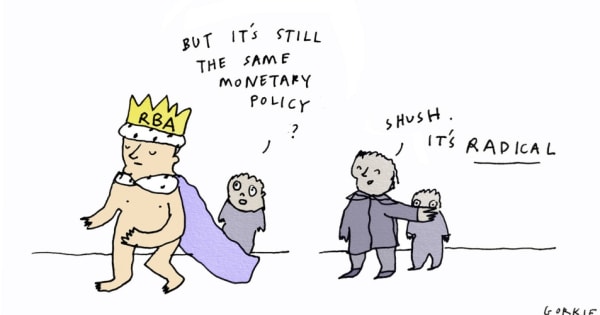


The answer is simple. If we want to improve our ranking in the international tests, we need to start teaching to the international tests instead of to the NAPLAN tests.
(end cynicism)
Australia is distinctive amongst participants in the OECD’s Program for International Student Assessment (PISA) in suppressing results by school system, encouraging Ashenden to imagine Australia as if it were 1 school system but to decry the fact that it patently isn’t and has low prospects of becoming 1 system within the medium term.
I suggest the better approach is to accept that Australian school education comprises 2 systems (Government and Catholic) and a range of private non systemic schools in most States and territories, and to analyse and treat differently the different types of Australian schools.
I don’t know how well PISA results correlate with NAPLAN results, but I presume one would find that Catholic systems do reasonably well on PISA in most jurisdictions, most Government schools do less well, and that there is a range of performance amongst the non systemic private schools. Such an analysis would allow attention to be concentrated on the systems or types of schools that are not performing to expectation.
So rather than try to create the architecture for a common system, I think it may be more fruitful to argue for the publication of Australian PISA results by school system or type. That would be politically difficult, but it is conceptually and practically a much easier start to improving Australia’s performance.
Why doesn’t the Grattan Institute look at Finland instead of its fixation with Asia? A look who funds Grattan explains all.
While Dean Ashenden’s commentary becomings increasingly convoluted (reforming the means of reformation etc.), Chris Bonnor is writing with great clarity and insight – http://inside.org.au/gonski-and-gillard-wont-fix-this-problem/. Amongst his numerous virtues, Bonnor is ready to stridently criticise Federal Labor where necessary:
“Faced with the growing social and academic divides between schools – and the equity challenges these create – all that the Gillard government has done is tie the hands of the Gonski panel, dilute any impact of its recommendations and oversee an ongoing squabble over who will pay.”
Maybe the best thing Crikey could to help improve schools is hire a new education writer.
I get the sense that there is a massive elephant in the room, which is to do with appropriate governance.
As a teacher who has been in and out of school since the 1970s, I noticed that the public order and the capacity of teachers to manage it, steadily deteriorating. During my last stint in the early 2000s, I was told by a principal that I had to leave myself an escape route when confronting refractory students. Once it was they who needed one.
Either we have to go down the relentlessly disciplined McDonalds training template/game show enthusing/internet learning road and use the very considerable youth culture/peer group leverages now available, or, we do what our more successful competitors are doing; applying ballbreakingly authoritarian pressure and a no escape culture of obedience.
The modern classroom has become a stressful nightmare for teachers where learning is discretionary. And this disease has moved down from the traditional adolescent year 9 imbroglio to encompass junior primary.
We don’t talk about this governance question because the laissez-faire libertarians who run our education system don’t want to admit they are being hung by their own petard by a human rights culture that doesn’t teach obligations, accountability and responsibilities first.
And McEducation is despised because it uses conformism and a culture of relentless enthusiasm that they disapprove of.
So, the classroom gently degenerates into an elaborately unacknowledged sub-chaos.