
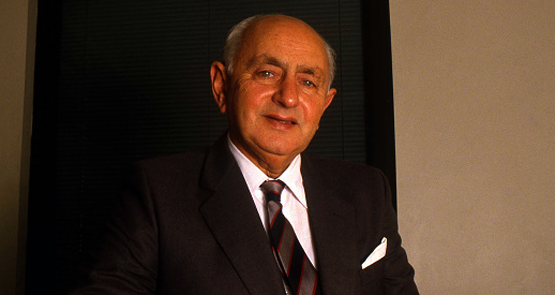
The Australian Electoral Commission has deregistered the Democratic Labour Party (DLP) while its only representative in the Australian Parliament, Senator John Madigan, has resigned to form his own party.
How times have changed for the old “Groupers”: the Soviet Union and the Communist Party are dead and buried, and the People’s Republic of China (aka the “red menace”) is now Australia’s biggest trading partner.
In the mid-1950s and ’60s, Robert Menzies’ Liberal Party relied on the DLP to split the Labor vote with “red scare” propaganda. In consecutive election campaigns, Menzies used the Cold War, the Petrov affair, “reds under the bed” and finally the “downward thrust of communism” and the “domino theory” to frighten the electorate into supporting the Coalition camp (and the US-led Vietnam War).
In 1956, the right-wing pro-Catholic party, the brainchild of religious obscurantist B.A. Santamaria, first emerged as the Australian Labor Party (anti-Communist) but became officially registered as the Australian Democratic Labor Party in 1957.
The party’s first parliamentary recruit was senator George Cole from Tasmania, who defected from the ALP after “The Split” to sit as a DLPer — and immediately received secretarial and travel perks from the Menzies government.
The DLP’s Senate numbers grew over the next decade, but prime minister Gough Whitlam wiped them out when he called a double dissolution election in 1974. All five ex-ALP “Groupers” were tossed out — senators Frank McManus and Jack Little (Victoria), Vince Gair and Condon Byrne (Queensland) and Jack Kane (NSW).
On July 20, 1984, the party tweaked its name and re-registered as the Democratic Labor Party of Australia (the U came into the party’s name in 2013). However, its electoral appeal remained on the nose until Peter Kavanagh was elected to the Western Australian upper house in 2006.
The media hailed the DLP’s “resurrection” in 2010 when John Madigan was elected to represent Victoria winning 2.3% of the primary vote (75,000 votes), well below the quota of 14.3%.
He took the last spot after receiving preferences from the right-wing minor parties: Pauline Hanson’s One Nation, Fred Nile’s Christian Democrats, Building Australia and Steve Fielding’s Family First.
In September last year, Madigan dramatically quit the DLP, telling senators that “the cancer of political intrigue clearly has infected” the Victorian state executive.
“It has become apparent to me that the DLP’s own worst enemies are within its own ranks,” he said. “Ever since the election, I have witnessed firsthand attempts by those in the party to assume power through any means, even if it means the very destruction of the party itself.”
He told the Senate a senior staff member “systematically ran a campaign of disinformation and disharmony in my office”, leaked confidential information and told lies.
Bizarrely, the party’s website is still claiming Madigan as its lone federal senator, with this swirling endorsement: “A blacksmith and railway worker, like Ben Chifley and his family, John epitomised everything that the labour movement stood for and was determined to bring the voice of the average Australian back to the Senate.”
Although the DLP remains attached to Madigan, he has other ideas.
Recently he approached the AEC to register The John Madigan Manufacturing and Farming Party to lead his re-election campaign next year.
As the name suggests, Madigan is attempting to capitalise on Victoria’s manufacturing implosion under the Liberals and Labor, and the neglect of rural voters.
Meanwhile, the party’s federal secretary, Michael Byrne, has until May 21 to challenge and overturn the AEC’s deregistration ruling.
“There are facts and circumstances to be relayed to the commission by way of review,” Bryne said in a statement. “We are confident that the information we provide in the application for the review will offer enough reason for the original decision to be set aside.”
As the federal leadership struggles to assert its authority, create a national party and extend its platform beyond anti-abortion, anti-euthanasia and anti-gay marriage, the prominent Victorian branch, originally created by Santamaria, is in chaos.
At last Sunday’s state conference in Melbourne, there was uproar when the platform gave sole voting rights to just five delegates, disenfranchising the other 25 who were present.
One of the delegates described the five-hour meeting as a “war zone”, with a majority of the 50 members in attendance “unhappy or very angry”.
Asked what he thought of the DLP, the late Gough Whitlam once remarked: “It isn’t democratic, it isn’t Labor and it isn’t a party, it’s a cult.”
Plus ca change …

Peter Kavanagh wasn’t in Western Australia, he represented the Western Victoria region in the Victorian upper house.
The statement that the DLP was created in Victoria by BA Santamaria is patently false. The DLP in Victoria was originally the Australian Labor Party (anti-Communist)and it resulted from a split in the Victorian ALP caused by the refusal of the Old Victorian Central Executive to attend a Special Conference held by the Federal Executive to reform the Victorian Branch in February 1955. Those who boycotted the Special Conference claimed to be the legitimate ALP in Victoria. Santamaria was never a member of the DLP. The two original leaders of the DLP in Victoria, WM Barry (the grandfather of Peter Kavanagh, elected in 2006 as a DLP member of the Victorian Legislative Council) and Les Coleman, who had previously been considered a supporter of Premier John Cain (Snr.), were not acolytes of Santamaria. The role of Santamaria in the Victorian DLP is overstated, and neither Frank Dowling nor Jim Brosnan, who were DLP State Secretaries, communicated with Santamaria over party activities. Santamaria died in the 1990s, and clearly could not by playing any role in the current DLP unless he rules the roost from Heaven.
What does this mean for Rachel Carling-Jenkins in the Victorian Upper House? Are they still registered with the State EC?
Vince Gair didn’t lose his seat – Whitlam bribed him with the offer of Ambassador to Eire (then deemed by oirish voters as the nearest equivalent to the Vatican.
As with so many of Gough’s ideas, too smart for his own good and stymied by John with the Night of the Long Prawns.
It is not vale DLP. The DLP is still registered with the Victorian Electoral Commission. The DLP has an MP in the Victorian Upper House, Dr. Rachel Carling-Jenkins.Santamaria didn’t create the DLP. As former DLP SenatorFrank McManus pointed out in his autobiography, “The Tumult and The Shoutinf” the DLP didn’t always agree with Santamaria.