
The ALP is lucky. As it gears up for the next federal election, it’s getting plenty of lessons from its counterparts in the US and the UK on what not to do in the coming campaign.
Two lessons stand out.
The first is that disunity is death. Hardly a new lesson for Australian politicians but history shows they’re slow learners.
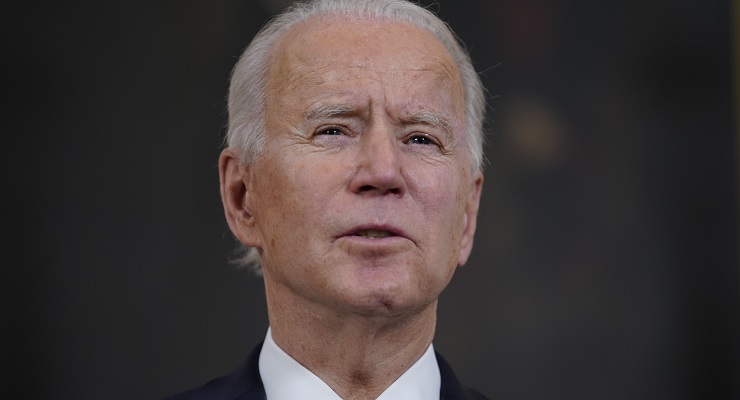
In the US, a bitter battle between progressives and moderates within the Democratic Party has derailed President Joe Biden’s reform agenda for months. Biden’s Build Back Better bill, alongside a major infrastructure bill, should have been huge vote-winners in last week’s important state elections. Instead, neither bill was enacted in time. All that voters got from the Democratic Party was a very public display of division, self-absorption, and incompetence.
So it was no surprise the Democrats suffered big losses in recent off-year elections. The Virginia gubernatorial race saw a state that Joe Biden won last year by 10 points elect a Republican governor. The Democrats only narrowly held on to the governorship in New Jersey, a state Biden won by 16 points.
Guy Cecil, chairman of the Democratic group Priorities USA, complained that “while Democrats spent weeks fighting each other, Republicans were focused on mobilizing their base and peeling away voters from the Biden coalition”.
Similar divisions afflicted the UK Labour Party’s conference in September, an ongoing conflict between hard-left Corbynists and centrist Blairites. In the middle of the conference, shadow cabinet member Andy McDonald resigned from his position. He was one of the few Corbyn allies left in the shadow ministry. He described Labour as “more divided than ever”.
A post-Brexit Britain struggling with petrol shortages, surging energy prices, empty supermarket shelves and reduced social welfare was a political gift for the conference. A unified and resolute Labour Party would have used it to crucify the Conservative Party. A divided and irresolute Labour Party could not.
There was no conference “bounce” in the polls. A tremendous opportunity was squandered on the altar of party infighting.
The second lesson for the Australian Labor Party is that excessive progressivism is fatal for a centre-left party.
Voters in the American suburbs, particularly women, were crucial to Biden’s 2020 presidential win. The loss of their support was a significant factor in the swing against the Democrats in many of last week’s state elections.
For example, in Virginia there was a shift to the Republican Party of 17 points among women voters and 14 points among suburban voters. This has been attributed largely to “cultural” issues in the gubernatorial election campaign. Incumbent Democratic governor Terry McAuliffe made the mistake of engaging on the role of “critical race theory” in the state school curriculum. His comment that “parents shouldn’t tell schools what to think” was seen as pivotal in his loss.
In Buffalo, India Walton, a socialist, won the Democratic primary for the mayoral race by defeating incumbent Democratic mayor Byron Brown, a moderate. Walton’s platform included reducing the police department’s budget. However, the progressive policies that appealed to many Democrats in the primary did not find favour with the broader electorate. Walton suffered a sobering 41% to 59% loss to the centrist Brown who participated in the election as a write-in candidate.
At the UK Labour Party’s conference, arguments around transgenderism competed for headlines with the party’s economic policies. And at a time when millions of swinging voters were questioning Boris Johnson’s capacity to address their everyday challenges, deputy leader Angela Rayner called the PM a “racist, homophobic misogynist”. Identity politics may have played well among the party faithful, but the polls indicate they were not a winner with the wider public.
The ALP must heed these two fundamental lessons if it wants to win the next election. That means presenting a united front and avoiding intraparty squabbles over climate change, taxation and asylum seekers.
Importantly, it also means steering clear of identity politics. Australian federal elections are won in the centre, not on the perceived moral high ground.


If all this is true why are the LNP governing? They have been disunited, riven by internal squabbles, caught up in culture wars and abysmally incompetent at rolling out programs, like vaccination. They’re would appear to be the text book example of what not to do. Admittedly a lot of people are absolutely terrified the incompetent charlatans will get back in, but why is it even close?
For whatever reason, the Conservatives are allowed to be a disunited mess. They get a pass. Hell, they get a pass for being in constant minority Government.
Importantly, they also get the unquestioning support of the Murdoch media.
Yep I think Rob’s got it. Conservatives are allowed to be a rabble for a reason the electorate knows but hasn’t fully explained.
Yes, But why was Morrison more appealing? Because of or in spite of his cruelty? People believe the LNP are better managers of the economy.
Last election the LNP had NO policies.
The ALP had sensible policies, such as negative gearing, capital gains tax, franking credits, etc. But the LNP misrepresented those policies, aided and abetted by the MSM.
I mean the LNP convinced people who receive tax refunds on franked shares dividends despite that removing their credits would mean they would be paying tax twice, though they hadn’t paid tax at all. I mean it is a good deal to get a tax credit on tax you didn’t pay!
ScoMo’s “appeal” was all marketing. I also think that since he was new to the job that many people thought they should give him a chance to show what he’s got.
When the ALP is a rabble it has a lot to do with everything. Their political disorganisation 2010-13 hurt them big time. LNP mirror image (actually worse because they couldn’t pass signature legislation) for the next six years and it was business as usual. Morrison oozes snake oil salesman. Shorten seems a bit earnest but he’s well organised. He reunited a shattered party after 2013 and got it within a seat of government. Maybe that was it. He was portrayed as sneaky. Maybe you have to be engaged to see even a little bit what they’re like. Every time I see Morrison I think of his corrupt pre-selection, the “accidental knifing” of his leader, his vicious handling of refugee issues, his fumbling tenure as treasurer, sucking beers in Hawaii while his country burned, his links to corrupt christians, his reflex lying, turning moral issues, like sexual violence, into political opportunities etc. When he puts on a baseball cap I see a f-wit in a baseball cap, when he pretends to build a chicken coop for his kids I see a cynic distracting attention from a looming disaster. You can only point all this out, it’s up for people to decide for themselves who to vote for.
Bad start to your comments given the LNP’s performance in the same space.
But a good finish that I doubt many would have reached.
Policies like negative gearing, fringe benefit tax (franking credit rebate?) tell an aspirational story to hard working Australian’s who want to get ahead.
You may not be an LNP supporter (or a “mainstream voter”) but that certainly is parroting the party line. Never mind that such policies contribute to ever increasing inequality in Australia.
Again, please name a policy or two that spring to mind.
All Scott said , ad nauseum, it’s a choice between Shorten and me
Odd how the elite, esp the wannabes, always claim an affinity with, and understanding of, the needs, aspirations & beliefs of the ‘little people’.
Perhaps because “…disunited, riven by internal squabbles, caught up in culture wars and abysmally incompetent…” is an apt description of ‘Labor’?
It certainly is if you’re a Murdoch hack. But not a history student. For some reason in our history when the going is tough (WW2 and post-war reconstruction, GFC, opening up the economy) we turn to Labor. When it’s easy we get lulled by the LNP mythology.
There is no comparison.
That was then, when Labor meant something – this is now, when it is a waste of space.
The current pack of oxygen thieves were pinged by Frank Crean decades ago – “The labor party used to be the cream of the working class but it has become the scum of the middle class.”
Most who knew him recognise that he had his useless son in mind.
It was Kim Beazley Sr not Frank Crean. So much for your conclusion.
The useless son aspect still applies.
I was relying on aged memory so apologies for the misattribution.
How about the overall point that ‘they were giants in those days’?
Compare the apparatchiks, time servers, seat polishers and careerists in the party now.
On googling, I find that the full quote is even more excoriating.
When I joined the Labor Party, it contained the cream of the working class. But as I look about me now, all I see are the dregs of the middle class. When will you middle class perverts stop using the Labor Party as a cultural spittoon? – Kim Beazley Snr to an ALP State Conference, circa 1970.
Couldn’t get much tougher than the current housing crisis, the cost of living crisis and the corruption scandals. You’d think Labor would romp it in, but where are they? On current form I’ll be voting Greens. Again.
Don’t bother to mention that last election the LNP rolled out an expensive,effective,and entirely dishonest social media campaign AND had Clive Palmer spending millions on an even more dishonest campaign. The LNP didn’t win the last election because of their good policies or Labor’s bad policies. They won it because their lies and spin were neverending and unprecedented. That’s not just my opinion. There’s been a fair bit written about that campaign, and the Tories in Britain were so impressed with it that they paid the social media gurus to work for them.
I can see your point with this reply, you completely lose me when you start talking about the breadth of knowledge you have about bludgers, for reasons described previously. The interesting thing about your comment is that you are accepting the most LNP voters have been groomed with Neoliberal propaganda and believe what they read/hear.
I agree, that is the socio political environment we live in I think, I would like to point out that it isn’t just Murdoch, all the mainstream media players are Neoliberals, Costello heads Channel 9, Gina,, Stokes, etc.
This makes your reasoning more valid.
Australia does not have a ‘media’ but a right wing ‘medium’ inspired by the US. Imported Anglosphere radical right libertarian PR and electoral tactics as refined by the ‘owned’ GOP and Tories….. legacy media focuses (at least editorial line) and obsesses about criticising the imaginary ‘left’ of UK Labour/EU, Democrats and Labor plus proxies; everyday is an election campaign…..for power …. whatever it takes.
Unfortunately their target is the ageing cohorts and trying to turn them, if not into LNP voters, but not voting Labor…. Bannon said same, i.e. not about voting for Trump but voting against Hillary…. (Vic Premier Andrews, CFMEU, Covid regulations etc. have been used as the negative proxy to show Labor in a negative light…).
Did you not read/understand Keane’s previous article (and many passim) pointing out that the LNP since 2013 have always taxed and spent more than did Labor even when it was confronting the GFC?
To many in the upper echelons of theALP the light on the hill is the neon sign outside the chinese restaurant in which the deals are cut.
Disunity is death, but we also need to remember that the ALP will never win an election by pretending to be the LNP – the Libs already own corruption, racism, poverty, division and jobs for the mates, if people want that they will vote LNP.
The stench of corruption around this government is such that an electoral focus on corruption and lies, if prosecuted with unity and focus , may well be the clincher.
Were Albo to have the guts he could say:
” We will legislate a fully independent ICAC, with real teeth, able to investigate anybody in public office of any kind, to conduct public hearings and to pursue their own priorities independent of any control by government.
We know that this will inevitably bring down ALP politicians in the future and we hope that it does, because this will mean that it is doing its job. If we politicians can’t clean up our act somebody else has to.
I challenge Scott Morrison to make this a bipartisan commitment”
The electorate would then be treated to a vintage display of Scummo’s weaselling , lying and gaslighting, which might focus electors’ minds a bit on the quality of the dreck we currently have in office.
The ALP have been a bit ambivalent on ICAC, as they inevitably have skeletons of their own, but a clear commitment on this would a) be good for public life and b) an important distinction between the two sides( or perhaps shades ) of politics.
Except if course Albo has already had the guts to make that commitment, and Smirko already has 3 years of squirming around the issue with little apparent resulting damage.
I must have missed the Invisible Man making so clear a commitment – citation required.
Biden name-dropped six times in the Democrat troubles, yet the sheer bastardry of Manchin and Sinema go unmentioned. And, of course, when there’s blame to pass around, it’s the left’s fault.
That it’s not fair does not stop it from being true. The same has applied in this country for years. The left has a choice of complaining about how unfair it is, or just getting on with the job of becoming a valid alternative to sufficient voters.
No political commentator worth his salt can compare what’s happening to the Democrats in the U.S with any other nation on earth, they are a nation dumbed down by decades of education cuts, brainwashed to within an inch of their lives by the Murdoch press, and now too screwed up to understand what’s happening or how to fix it, a failed state with rising poverty and homeless people trying to exist on the lowest wage scales in the developed world and without even basic health care, the rest of the world should just look away in disgust and get on with making sure their countries don
t finish up the same, there are 2 kinds of conservative voters, the very rich or the very stupid and its plain to see where the majority of the U.S population fit in that equation..Hmm – anyone who earns less than $400,000.00 PA is a “layabout” ?
Agreed braddy – approaching failed state!
Approaching?
I think it is barely visible in the rear view mirror.
Thank you, Player Queen – a bad case is not helped by constant, repetitive protestation, as Gertrude noted.
It’s simple really, the LNP and their media cohorts are masters at playing to the worst side of human nature, greed/ fear and especially passive aggression. Works every time, it’s dead easy to go down, gravity will do it for you. To lift up a society to high values of compassion and consideration for the greater good of humanity and the environment is very difficult. This is the human project- towards the higher, as all great spiritual teachers in history have tried to tell us. If I believed in Satan ( which I don’t) I would take a good look at Morrison.
As soon as Ross Stitt referred to “hard-left Corbynists and centrist Blairites” I stopped reading. What is the freakin’ “hard left” except another term of abuse used by rightwingers. Stitt, you are unmasked.
Not by describing the Greens as hard left. It is almost Cold War thinking to use this kind of language in modern Australia. I would describe the ALP as institutionally corrupt and having the kinds of policies you get when a party has little democratic input from its members, corporate donors, and often corrupted institutional union backing, and the Greens as having the kinds of policies you get when a party is not funded by corporates or moribund unions.
In my view this description has nothing to do with any sensible use of the term, “hard left”.
The Greens are up front with their detailed policies. Not the others who are scared to say what they believe in. Whatever they say becomes weaponised by the LNP & Co. They’re the rabbit in the spotlight, or the roo in the headlights. It’s self imposed.
Or complicit, in that there is very little the Alternative Liberal Party would do differently but don’t want it to be so obvious that even the rusted ons might realise.
Agree that he’s not worth reading – wonder why there is no CV/disclaimer at the bottom, as is usually the case?
Perhaps because DR ROSS STITT is a former tax lawyer who still consults on tax policy.
In addition to law and commerce degrees, he has a PhD in political science from Sydney University.
He is a freelance writer, primarily on Australian politics.
https://www.newsroom.co.nz/profile/rossstitt/posts