

How much will the Reserve Bank lift interest rates tomorrow? Some in the markets say it could be 0.25%, which would take the rate to an unwieldy 0.60%, others say it could be 0.15% to take it to a round 0.50%, and there are one or two economists who can see a 0.50% — although the aesthetics of 0.85% are also unappealing.
The most popular forecast is 0.40%, taking the cash rate to 0.75%. That would then allow the bank to lift it by a further 0.25% or 0.50% in July.
AMP chief economist Shane Oliver wrote at the weekend, “the clear messages from the RBA since its May meeting are that: it’s concerned about a rise in inflation psychology (or expectations); bigger rate hikes are not off the table as it seriously considered a 0.4% hike in May but opted for a ‘business as usual’ 0.25% hike; and that more rate hikes are on the way … there is a risk it could even opt for a 0.5% hike. Either way by year end we continue to see the cash rate rising to between 1.5% and 2% with a peak of 2% to 2.5% next year”.
This is all in the name of curbing inflation; as the economists at Moody’s noted in their prediction of a 0.4% rise, “consumer inflation has significantly picked up in Australia. CPI rose 5.1% in the March quarter driven by high automotive fuel and dwelling costs.”
But tightening monetary policy doesn’t curb inflation. It doesn’t even really treat the symptoms of inflation. It simply clobbers demand and reduces economic activity.
To the extent that strong demand is contributing to inflation — “too much money chasing too few goods”, you might remember from school — clobbering it will reduce inflationary pressure. With households still reducing their savings back to pre-pandemic levels, as last week’s national accounts showed, demand is certainly a factor.
The National Accounts’ GDP implicit price deflator increased 2.9%, the fastest rate since the March quarter of 1988 and a sign of just how embedded cost pressures are now in the wider economy. The ABS pointed out that as a key part of that deflator, the domestic final demand implicit price deflator rose 1.4%, which was the strongest growth since the introduction of the Goods and Services Tax in 2000.
But the main inflation narrative centres on energy prices and supply chain problems here and overseas, and the Reserve Bank could send us into a deep recession with precisely zero effect on that. Raising rates won’t change Xi Jinping’s zero-COVID mentality and his willingness to shut down large parts of the world’s second-largest economy; it won’t produce microchips or more new cars faster; it won’t compel Russia to withdraw from Ukraine. And it won’t push energy prices down, nor enable us to go back in time and prevent the climate wars from preventing a much more rapid decarbonisation of our energy system.
In fact, supply shocks driving inflation, such as a surge in energy prices, have proven to be the hardest types of cost pressures to control, and take the longest. The 1973-74 first oil shock saw inflation peak at 17% in 1974. It only eased from that level to an annual rate of 11.4% by the time the Hawke government was elected in 1983.
Nor will higher interest rates bring fine weather and boost production of fresh fruit and vegetables to lower high prices in supermarkets boosted by the record rains and floods in March and April, or increase the supply of workers.
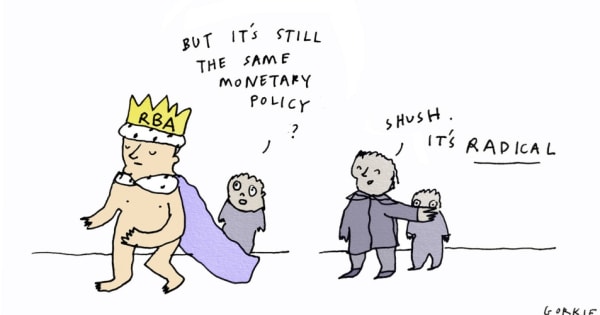
But higher interest rates can and will force down jobs growth, undermine whatever wage pressures are building — we keep being assured they’re there, but they never seem to manifest — and slow growth. Ironically, the Reserve Bank has moved from a policy of not raising interest rates until wages began growing properly to raising rates just in time to ensure wages don’t grow properly.
That’s why business and its media cheerleaders are calling for our lowest-paid workers, who have endured the lowest wages growth over the past decade, and gone backwards in real terms to suffer another real wage cut. No matter what the economic conditions, business and Australian Financial Review columnists always think the solution is wage cuts.
Many of those companies urging “wage restraint” and passing higher prices have enjoyed a remarkable increase in profits in recent years, sufficient to drive the profit share of national income to record levels. And many were saved by taxpayer-funded crisis measures like JobKeeper. Watch for them to start complaining when rising interest rates smash demand and send households back into their shells — while we wait for factors beyond the control of the Reserve Bank to start reducing inflation.


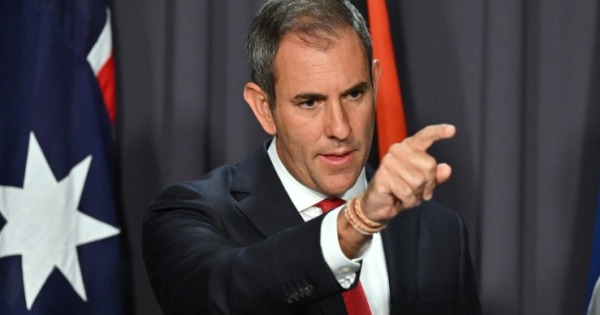
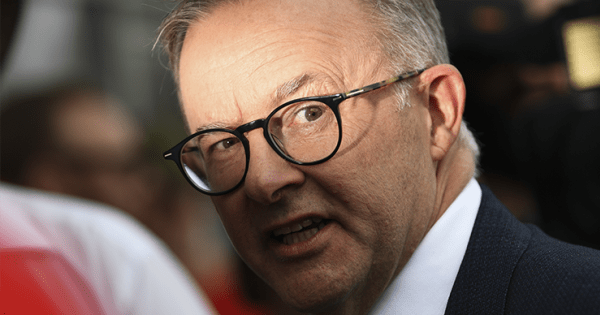
“No matter what the economic conditions, business and Australian Financial Review columnists always think the solution is wage cuts.”
Shocking, isn’t it? Our economy is going great until workers want a better cut, then it’s too precarious to allow for such measures. Or in hard times, it’s just not feasible to pay workers what they no doubt deserve because circumstances are just too hard.
It’s no wonder so many get turned off by economics when the biggest economics fanboys always find “economic” justifications for why they should get more and you should get less.
The simple reality is that there have been real efficiency gains in the last 10 years but our previous corrupt government worked very hard with business to make sure the profits from those gains went only to business and that the workers got none of it.
Time to sort that out.
Is cost of housing/rent included in inflation figures?
If not, why not?
Regarding interest rates, I’d like to see how having almost 0% interest has affected the economy. Apart from supercharging the housing market, has it led to higher levels of productive investment?
Despite the economic orthodoxy that lowering interest rates will increase productive investment (and vice versa) – which is the RBAs sole justification – there is almost ZERO correlation between the two (as the last FOURTEEN rate cuts confirm).
Businesses will ONLY increase investment when they expect an increase in market demand.
The only result for which there is an ABSOLUTE (inverse) correlation to is falling interest rates leading to asset inflation.
Hence, the house price fiasco.
Economic orthodoxy, such as the narrative that higher rates are a just response to inflation, benefit whom?
If we look closer, by examining the proposition that wage increases are an attempt to keep up with inflation, we may ask, what is inflation?
For example, when energy costs rise faster than inflation, who benefits, and why?
Does an increase in the price of oil change the amount of oil available in the world?
Unlikely, because oil takes millions of years to be formed.
Something else is happening. What is it, and who benefits?
Strange that the KGB could cause Australians to lose their houses. And that’s economics?