

It’s hard to find good news at the moment.
Large parts of Sydney and, in the last couple of days, regional NSW have endured their second, third or even fourth major flood this year, as infrastructure and planning frameworks designed with the now quaint idea of “once in a hundred years” prove plainly inadequate in the face of climate change.
COVID cases are again surging, as are numbers of deaths.
The broken east coast energy market continues to see generators gaming the system by withdrawing capacity.
Mortgage holders are being punished with large consecutive interest rate rises to address an imported inflation problem they can do nothing about.
Workers face big real wage cuts and years of falling real wages on top of a decade of wage stagnation.
That means we can’t even enjoy the upside of a tight labour market and worker shortages, which means disrupted and cancelled services and delays wherever you look. The airline industry, which holds a passionate hatred of its own workforce, falls to pieces the moment the slightest pressure is applied to it.
Longer-term problems that can’t muster much interest from the media, like the continuing crisis in aged care, carry on in the background, like a human misery equivalent of cosmic background radiation (the alleged aged care quality regulator halved its site visits last financial year and cut its overall monitoring by 30%, even as nearly 2000 aged care residents died of COVID from January onwards).
In addition to poor access for first home buyers, renters face skyrocketing rents due to a lack of housing, and rental affordability for low-income earners is at a point of major crisis. People who lose their homes to floods face months living in tents or caravans.
Then there’s higher education, health system problems and the ongoing tragedy that is our failure to Close the Gap.
Let’s have no lazy both-sides-ism about all this — much of the blame lies at the feet of the federal Coalition for a near-decade of climate inaction, wage suppression, no energy policy, demonising negative gearing reform and aged care negligence. Despite invoking “adaptation” as one of its reasons for not doing anything by way of emissions reduction, the Coalition did zip on adaptation investment to improve resilience to more extreme weather. Hundreds of thousands of people have been paying the price in recent months.
But there’s genuine bipartisanship elsewhere for all this. The National Electricity Market — the great neoliberal experiment in creating a market for utility services — is a failure decades in the making across federal and state governments. The problems of the aged care system are decades old. Our current industrial relations system is Labor’s Fair Work Act. The privatisation of Qantas was a Labor reform. The housing crisis is across years and all levels of government and Labor has ditched any plan to fix negative gearing. No government, of whatever stripe, is interested in re-imposing basic COVID measures like mask mandates. Both sides have failed Indigenous Australians.
And independent bureaucrats get to share some of the blame, too. The Reserve Bank misled Australians on interest rates and has retreated to neoliberal orthodoxy at the first whiff of inflation grapeshot, punishing the households they urged to borrow.
A number of these problems are not amenable to business-as-usual policymaking, even if undertaken with goodwill and competence — two characteristics mostly lacking over the past nine years. Building more resilient infrastructure and avoiding what is now a cycle of flood, recovery, repair, flood — where the only improvements come in the speed with which recovery funding flows to victims — is a mammoth undertaking that will need Commonwealth and state coordination. Improving housing access will take more than a small-target home equity scheme and so more social housing. Aged care reform will cost a lot of money just to stop the system sinking into permanent catastrophe. And Labor remains committed to an inadequate emissions reduction target and continues to approve carbon-bomb gas projects.
Australians are entitled to be angry with their governing class — the men and women who occupy positions of power and influence in public policymaking. Not just the politicians and the bureaucrats, but the business leaders who suppress wages and maximise profits, the energy executives who game the system, the fossil fuel executives and lobbyists who captured government, the media executives, editors and senior journalists who cheered on bad policy and demonised good policy. Australians of all stripes — urban, regional, young, old, small business, workers — are paying a steep price for policy failures across a broad front, with little prospect of change any time soon.
But as always it’s low-income earners, the young, the economically marginal, who do it worst. What prospects for people in flood-prone regional communities who struggle to get even basic housing, or a low-income couple in outer suburban areas doomed to a lifetime of renting, or a family that has only seen their household income go backwards in real terms and now face hundreds of dollars extra a month for mortgage repayments? We’re failing millions of Australians.
If that’s not cause for deep introspection by government new and old, bureaucrats and business leaders, then it’s not clear what would be.

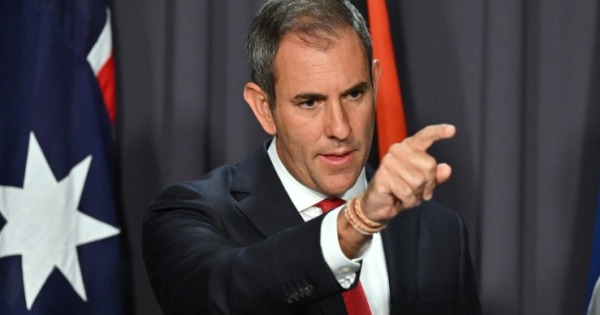
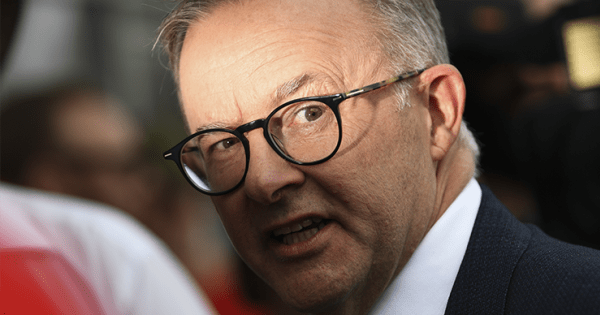
“If that’s not cause for deep introspection by government new and old, bureaucrats and business leaders, then it’s not clear what would be.”
It might be a cause for introspection if there was a genuine belief among them about some common bond that unites all Australians. But there is no such sentimentality, even if they occasionally pretend otherwise. Those at the top are engaged in class war, pursuing their own interests through exploiting the rest any way they can. When ministers argue successfully in court they have no duty of care to the public we should be grateful for that glimpse of the truth.
That glimpse of truth is not the case for all politicians fortunately, although near universal on the conservative side.
Although you passingly mention media, the media bear huge responsibility for our current ills, having consistently pushed policy – such as Keane’s formerly beloved neoliberalism and privatisation – that the population as a whole didn’t support and had to be cajoled and manipulated to agree with, often by distractions such as culture wars and actual wars.
Out abysmal media continue to do a disservice to our nation. Let’s hear more about that – or is Crikey now so comfortable being one of the players that we won’t hear much real criticism?
The latter.
Sadly, I think so too.
You left out the rivers and reefs. Snowless skiiers. Mutual obligation on $46 a day. Fibre to node. National shipping line (what?). Bullet trains. Holden. Explorer socks in Rossi boots eating Arnotts. CBA, forget the A. PM’s response to Uluru. Billions of Aussie creatures burnt to death. The endless commute. Meanwhile the ocean girds its loins preparing to move in. Pretty good for a can-do society in the lucky country.
Neither major party want to implement policies that fix these issues. Be it vested interests/donors/political cowardice/ineptiduce to downright sadism, they just don’t want to do it. The solutions are there.
Yes, Labor got over the line with a modest policy offering. And the coalition finally got smashed for its crimes against society over 9 years. But let’s give Labor a chance to see if Albo can harness the radical energy inherent in the independents and The Greens. It is clearly time for radical action across the many area you mention. And it is clear that radical action means more tax revenue from polluters and business who have enjoyed inordinate profit over 9 years and the design of a fairer tax system based predominantly on wealth, and less on income. In my view the erroneous convention of ‘mandate’ needs to be cast aside by this government and it must vigorously prosecute the case for a fairer Australia that seizes all the opportunities presented by the urgently need to decarbonise. We are at a place akin to the end of WW2 and we need to act radically, including re-nationalisation where that is in society’s interests. Business has demonstrated it is not ‘efficient’. It is greedy and corrosive to cohesive equitable society. We need to inject a lot more socialism into our liberal social democracy. BAU will just guarantee failure and decay.
Great comment, beautifully put..!!
Agreed Been Around. Just a tiny different point of view on mandate. I don’t think the percentage of first preference votes since errrr… was it 1935? constitutes a mandate and I’m concerned that taking away all but one staffer of the independents is deliberately calculated to make them less effective. Having said that, I hope they’ve got the smarts for it.
It strikes me as being similar to an employer changing the conditions of employment after a person has been accepted to a new position. I’d hate to think that the idea is to make them less effective but it seems a very retrograde step by the new Govt. I feel
(a) that it is highly discriminatory, (b) that they probably do have the smarts for it and
(c) will become closer as a group, considering they are all independent.
DH Lawrence’s ‘Kangaroo‘ protagonist had such vision, as did the pseudonymous partners M. Barnard Eldershaw whose “Tomorrow & Tomorrow” in 1947 had a chapter & half censored until 1983 because of the seditious advocacy of Isolationism and disentanglement from Empire (as was).
Such Utopianism has long been an especially fecund theme in Australian literature and usually predicated, not on FOWF but quarantine, from ideologies as much as viruses.
Hi neolib, vale bees.